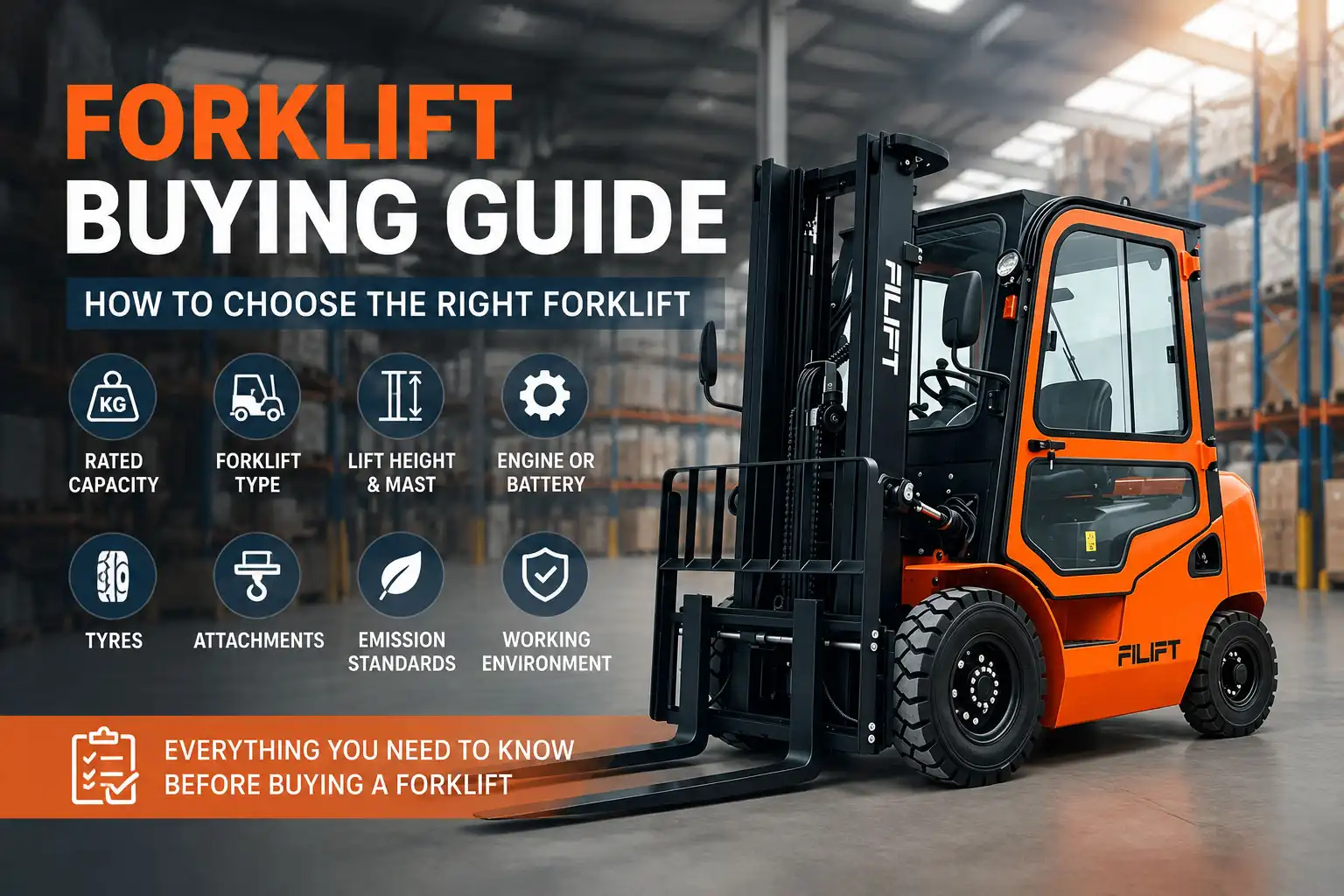
Forklift Buying Guide: How to Choose the Right Forklift?
Quick Answer:
For first-time buyers, the most important thing is to provide your supplier with accurate information about how much it weighs, how high you need to lift it, and where the forklift will operate. Then consider mast type, engine or battery, tyres, the forklift type, transmission, load center, fork length, attachments, working environment, emission requirements, and optional features. A professional forklift supplier can then recommend the appropriate forklift type and configuration.
This guide explains the key factors you should consider before requesting a forklift quotation.
1. Rated Capacity
The first step is confirming your load weight. Rated capacity is the maximum load a forklift can safely lift under standard conditions.
Common capacities include:
·1.5 Ton
·2 Ton
·2.5 Ton
·3 Ton
·3.5 Ton
·5 Ton
·7 Ton
·10 Ton and above
Choosing a forklift with insufficient capacity may create safety risks, while selecting an oversized model can unnecessarily increase purchase and operating costs.
Read our detailed guide: How to Choose the Right Forklift Capacity?
2. Lifting Height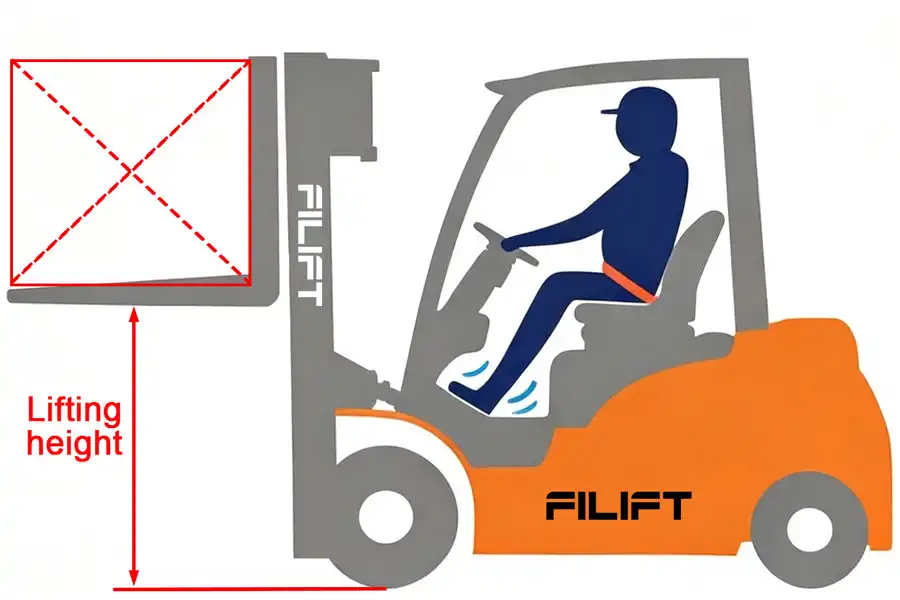
The required lift height depends on your warehouse or working environment.
Typical lift heights include:
·3 m
·4.5 m
·6 m
·7 m and above(normally for reach truck)
Remember that higher lift heights usually reduce the forklift's lifting capacity, so selecting the correct mast is equally important.
3. Use Indoors or Outdoors?
Your working environment greatly affects forklift selection.
Generally:
·Indoor applications are better suited to electric forklifts because they produce zero exhaust emissions and operate more quietly.
·Outdoor applications often use diesel or LPG forklifts for their higher power and longer operating time.
If the forklift will be used both indoors and outdoors, discuss your working conditions with your supplier to find the best solution.
4. Mast Type
The mast determines how high the forklift can lift and whether it can work in areas with height restrictions.
Common mast types include:
·Duplex Mast
·Triplex Mast
·Full Free Lift Mast
Different mast designs are suitable for different warehouse layouts and container operations.
Read our detailed guide: How to Choose the Right Forklift Mast?
5. Engine or Battery
The power system depends on the type of forklift.
For diesel forklifts, customers usually choose between:
·Chinese engines
·Japanese engines
For electric forklifts, the main battery options are:
·Lead-acid battery
·Lithium battery
Each option has different purchase costs, maintenance requirements, operating time, and service life.
Read our detailed guide: Lithium Forklift Battery vs Lead Acid Battery: Complete Cost, Performance and Maintenance Comparison
6. Tyres
Choosing the correct tyre improves safety, comfort, and operating efficiency.
Common tyre options include:
·Pneumatic Tyres
·Solid Tyres
·Non-marking Tyres
The best tyre depends on your floor conditions and working environment.
Read our detailed guide: Forklift Tyre Types and Selection Guide
7. Choose the Right Forklift Type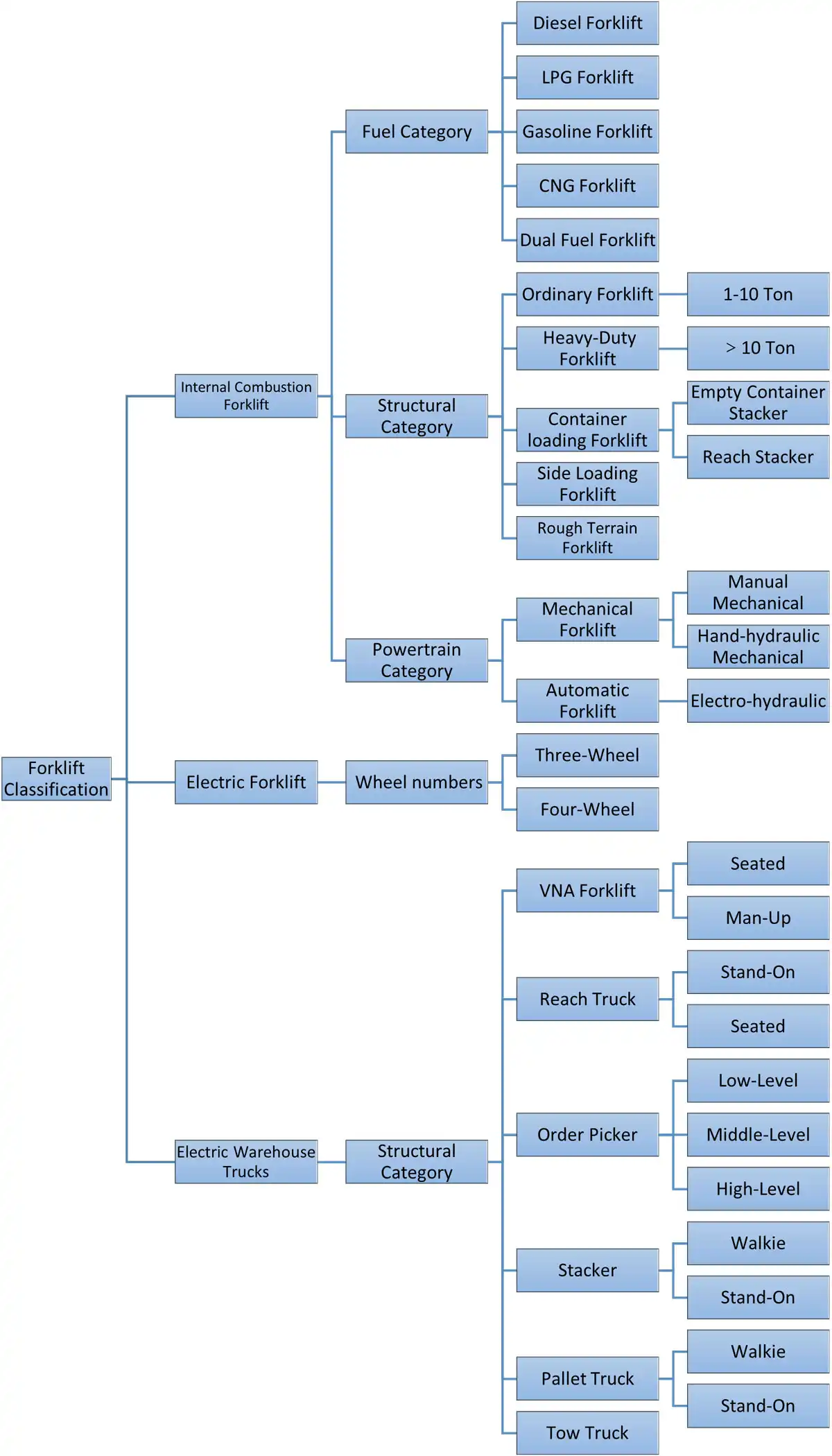
Different forklift types are designed for different working environments and applications.
Common types include:
·Diesel Forklift
·Electric Forklift
·LPG Forklift
·Reach Truck
·Pallet Truck
·Stacker
·Order Picker
·Rough Terrain Forklift
·VNA Forklift
Each type has its own advantages in terms of lifting height, operating environment, manoeuvrability, and running costs.
Read our detailed guide: How Many Types of Forklifts? A Complete
8. Transmission
Most modern forklifts are equipped with an automatic hydraulic transmission, making operation easier and improving productivity.
Manual transmissions are now uncommon and are mainly used in specific markets or special applications.
9. Load Center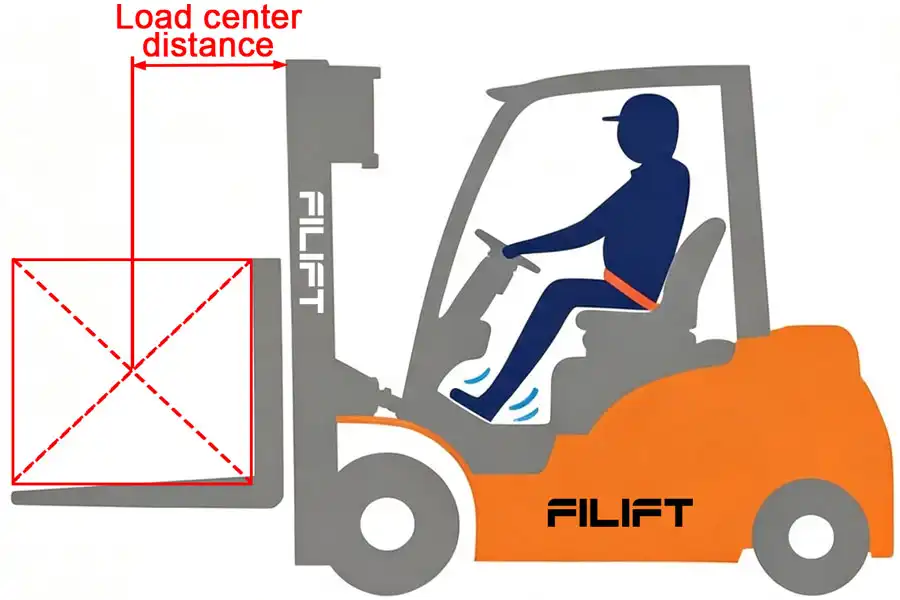
The standard load center is usually:
·500 mm
·600 mm
If your load has a longer load center than the forklift's rated specification, the actual lifting capacity will decrease.
Always inform your supplier if your loads are unusually long or have an uneven weight distribution.
10. Fork Length
Fork length should match the size of your pallets and loads.
Common fork lengths include:
·920 mm
·1070 mm
·1220 mm
·1370 mm
·1520 mm and above
Longer forks are not always better. Using excessively long forks may reduce manoeuvrability and create safety hazards.
11. Attachments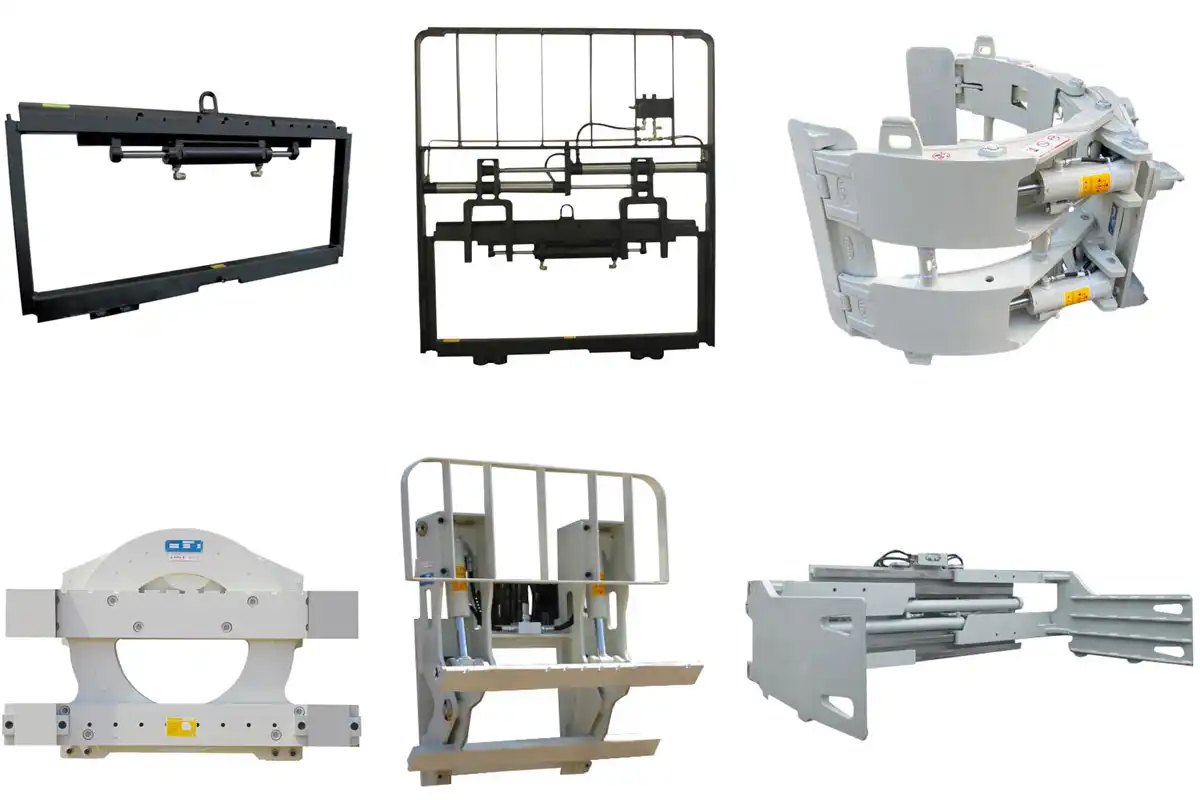
Forklift attachments can significantly improve productivity for specific applications.
Popular attachments include:
·Side Shifter
·Fork Positioner
·Paper Roll Clamp
·Bale Clamp
·Rotator
·Push-Pull Attachment
Selecting the right attachment may also affect the forklift's lifting capacity.
Read our detailed guide: How to Choose the Right Forklift Attachments?
12. Special Working Environment
Be sure to tell your supplier if your forklift will operate in special environments, such as:
·Cold Storage – requires cold-resistant components and suitable configurations for low-temperature environments.
·Shipping Containers – may require compact dimensions or specific mast options for container operations.
·Rough Terrain – requires forklifts with 4×4 drive systerm, stronger chassis, higher ground clearance, and suitable tyres.
·Corrosive Environments – such as cement plants or chemical industries, may require corrosion-resistant treatments and specially treated hydraulic cylinders to improve durability.
·Hazardous or Explosive Environments – areas with flammable gases or dust require explosion-proof forklifts with specially designed safety components.
Special working conditions often require customized configurations.
13. Emission Requirements
Different countries have different emission regulations.
Common standards include:
·Euro 3
·Euro 5
·EPA Tier 4
·China Stage II/III
Always confirm your country's emission requirements before purchasing a diesel forklift.
Read our detailed guide: Forklift Emission Standards Explained: Euro 5, EPA Tier 4, and China Stage III
14. Other Options
Operator comfort is especially important for long working hours.
Common cabin options include:
·Enclosed Cabin
·Air Conditioning(AC)
·Heater
·Front and Rear Windshield Wipers
·Rear Camera
·Blue Safety Light
·OPS (Operator Presence System)
Choose the options that best suit your local climate and working environment.
Final Checklist Before Requesting a Forklift Quote
Before contacting a forklift supplier, prepare the following information:
✅ Forklift type
✅ Indoor or outdoor use
✅ Rated capacity
✅ Lift height
✅ Mast type
✅ Engine or battery preference
✅ Transmission
✅ Tyre type
✅ Load center
✅ Fork length
✅ Required attachments
✅ Special working environment
✅ Emission requirements
✅ Cabin options
Providing this information will help your supplier recommend the most suitable forklift and prepare an accurate quotation more quickly.
Need Help Choosing the Right Forklift?
If you're still unsure which forklift configuration is best for your application, the FILIFT team is here to help.
Simply tell us your load weight, lifting height, working environment, and application, and we'll recommend the most suitable forklift solution based on your requirements and budget.