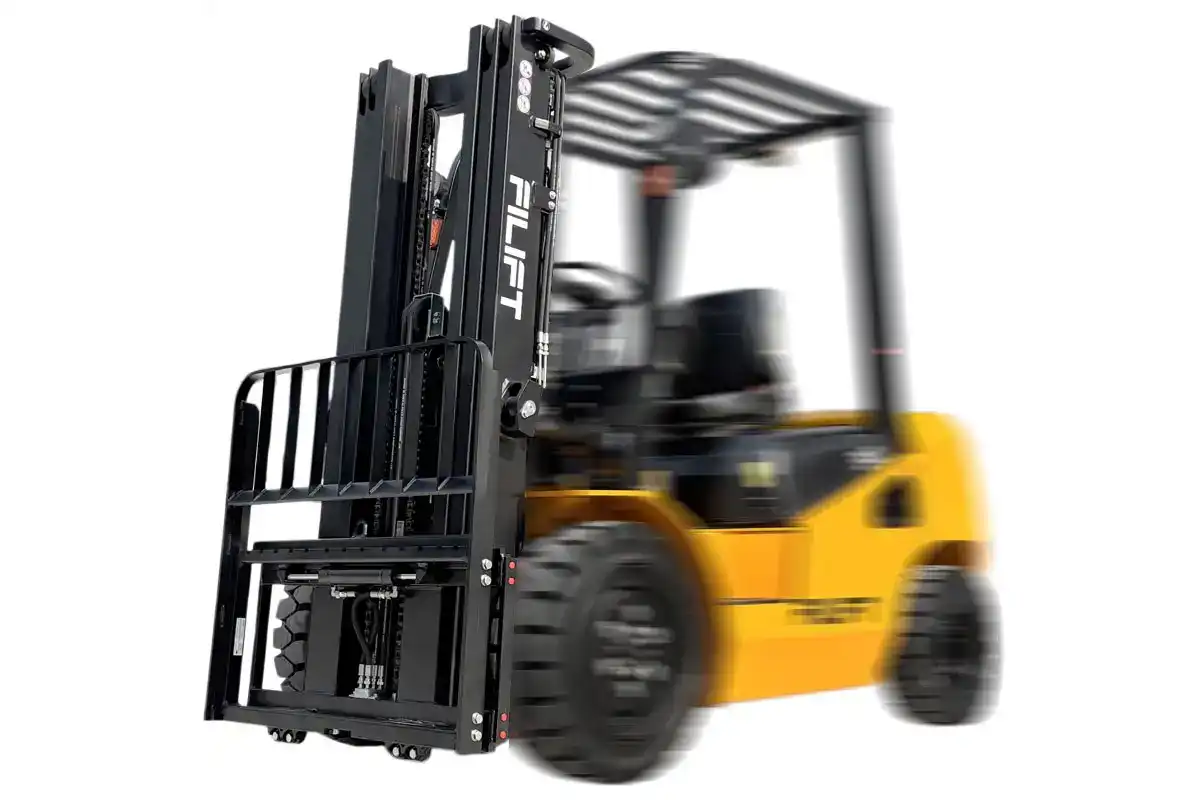
How to Choose the Right Forklift Mast?
When purchasing a forklift, many customers focus mainly on load capacity and lift height, but the mast configuration is just as important. Choosing the wrong mast can lead to operational limitations, poor visibility, reduced efficiency, or even situations where the forklift cannot enter containers or pass through warehouse doors.
Whether you are buying your first forklift or upgrading your warehouse equipment, this article will help you better understand forklift mast configurations and how to select the right forklift for your working conditions while avoiding costly mistakes.
In this guide, you will konw:
1.What is a forklift mast?
2.Main mast specifications you need to know
3.Types of forklift masts
4.Typical mast selection cases
1.What Is a Forklift Mast?
A forklift mast is the main lifting assembly mounted at the front of the forklift. It is responsible for lifting, lowering, and tilting the forks, directly determining the truck's lifting height, working capability, and application range.
A mast is typically composed of:
·Outer mast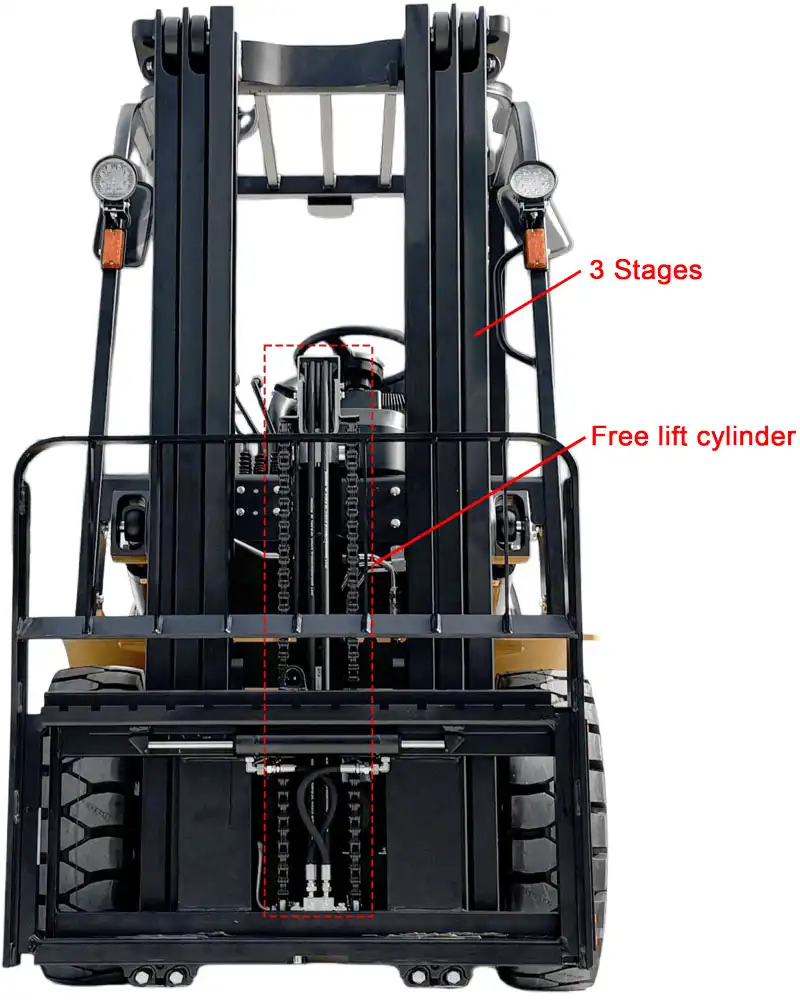
·Inner mast
·Rollers
·Chains
·Backrest
·Lift cylinders
·Hydraulic hoses
According to mast structure, forklift masts are commonly divided into:
·Single-stage mast
·Two-stage mast
·Three-stage mast
·Four-stage mast
Based on operating requirements, masts can also be classified into:
·Standard mast (Non-Full Free Mast)
·Full Free Lift Mast
The biggest difference between a standard mast and a full free lift mast is that a full free mast includes an additional free lift cylinder, allowing the forks to rise before the mast itself extends upward.
2.Main Mast Specifications You Need to Know
2.1 Lift Height (B)
Lift height refers to the maximum height the forks can reach from the ground after lifting.
In simple terms, it is the maximum height to which the load can be raised.
Important Note
When the lift height exceeds 3 meters, the forklift's actual load capacity may decrease. Always refer to the forklift load chart for the real residual capacity at different lifting heights.
2.2 Lowered Mast Height (C)
This is the distance from the floor to the top of the mast when the mast is fully lowered.
Important Note: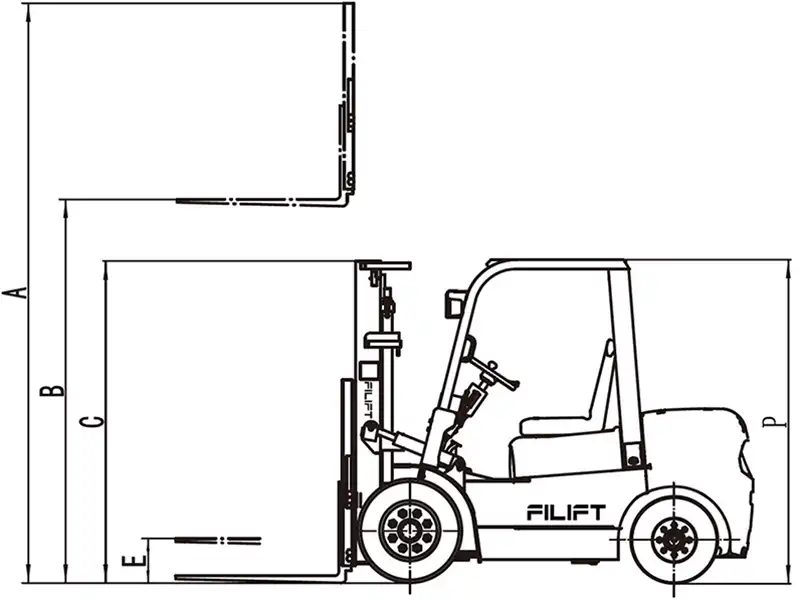
This dimension is extremely important in height-restricted environments such as:
·Warehouse doors
·Containers
·Underground parking areas
·Low-clearance workshops
For example:
·20GP container door height: approx. 2280mm
·40HQ container door height: approx. 2580mm
If the forklift's lowered mast height exceeds the container door height, the mast needs to be removed during container loading.
This is the distance from the floor to the top of the mast when the mast is fully extended.
This specification is especially important when evaluating ceiling clearance and warehouse safety.
2.4 Free Lift Height (E)
Free lift height refers to the maximum height the forks can rise without increasing the overall mast height.
In other words:
·The outer mast does not move upward
·The overall mast height remains unchanged
·Only the forks rise first
This feature is especially important in low-clearance working environments such as:
·Containers
·Underground warehouses
·Low-ceiling workshops
·Areas with low door openings
Free Lift Height: With or Without Load Backrest?
One of the most commonly misunderstood mast specifications is the difference between:
·Free Lift Height with load backrest: how high the forks can rise before the outer mast starts extending
·Free Lift Height without load backrest: how high the forks can rise before the load backrest exceeds the lowered mast height
The key difference is whether the height of the load backrest is included in the measurement. In most real applications, customers care more about the free lift height with load backrest,because it reflects real operating conditions more accurately.
Generally, forklifts below 7 tons are equipped with a load backrest, above 7 tons often do not use one.
3.Types of Forklift Masts
3.1 Simplex (Single-Stage) Mast
A single-stage mast is the simplest mast design. It consists of one fixed outer mast and one lifting mechanism (free lift cylinder).
The mast height itself does not extend during lifting. The forks move vertically along the guide rails.
Features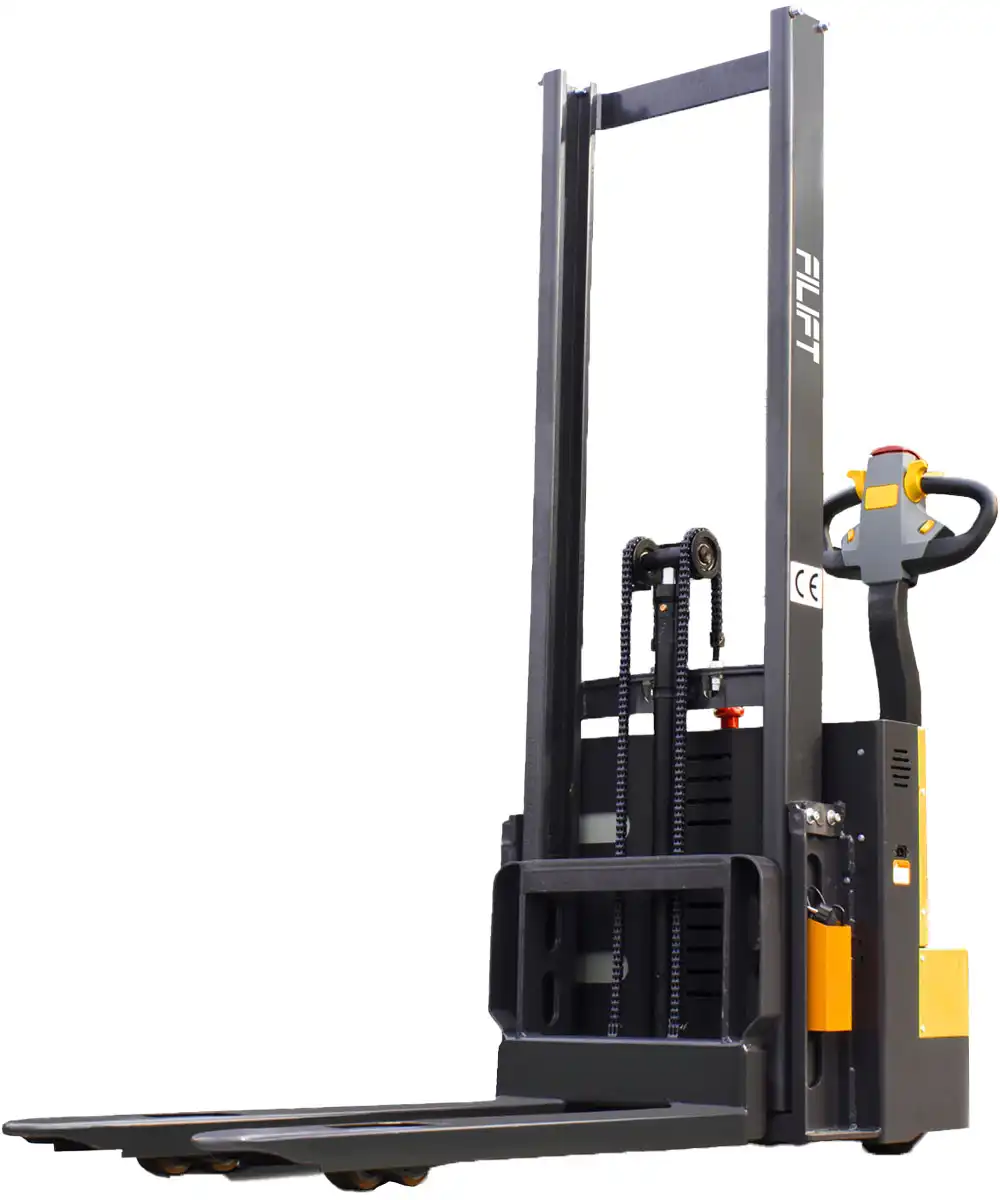
·Simple structure
·Lower cost
·Excellent visibility
·Lift height equals free lift height
·Ideal for low-clearance environments
Limitations
·Limited lifting height, usually below 2 meters
·Commonly used on stackers rather than forklifts
3.2 Duplex (Two-Stage) Mast
A two-stage mast consists of:
·Outer mast
·Inner mast
It is divided into:
·Two-stage standard mast
·Two-stage full free lift mast
3.2.1 Two-Stage Standard Mast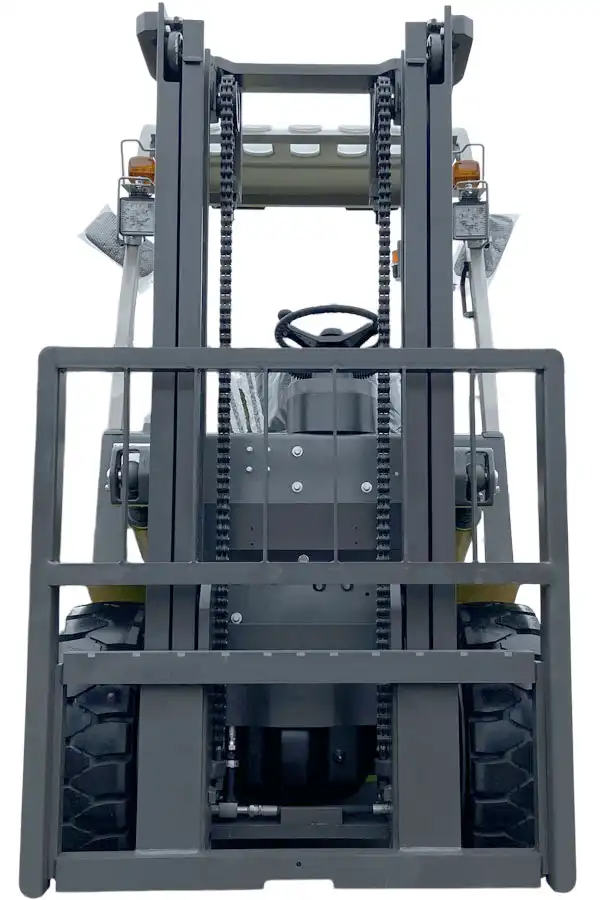
Two-stage standard mast is the most common mast.
Features
·Very low free lift height (typically around 15mm)
·Excellent forward visibility
·Lower cost
·Lift height generally between 3m and 6m
Limitations
·Not suitable for low-clearance environments
·Cannot operate efficiently inside containers
Because there is no center free lift cylinder, the operator's visibility is better.
3.2.2 Two-Stage Full Free Lift Mast
A two-stage full free lift mast includes an additional free lift cylinder.
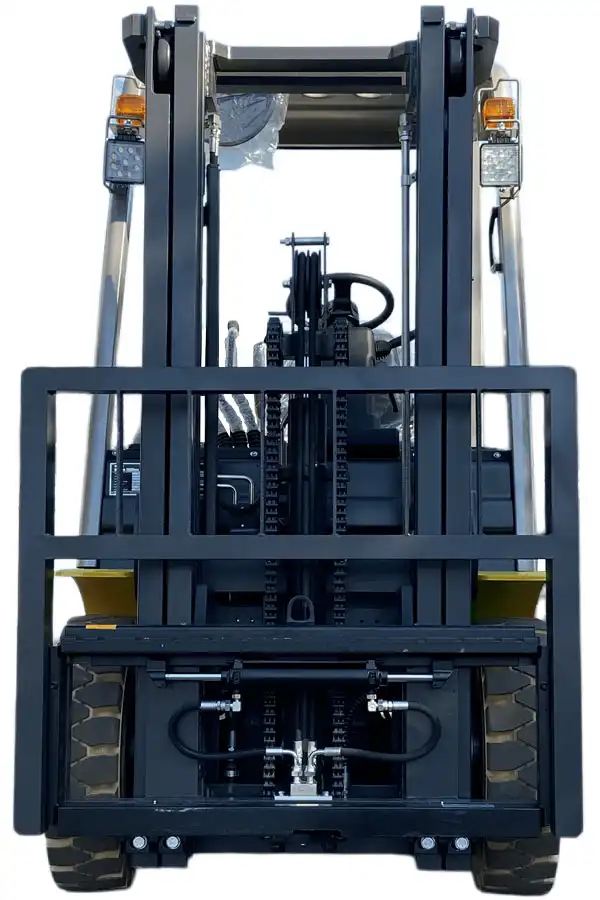
Inside containers or low-clearance spaces, the forks can rise first without the mast or load backrest hitting the ceiling.
Features
·High free lift capability
·Suitable for container operation
·Lift height generally around 3m
·Also called a ''container mast''
Limitations
·Higher cost than standard masts
·Slightly reduced visibility due to the center cylinder
3.3 Triplex (Three-Stage) Mast
A three-stage mast adds an additional middle mast section.
Structure: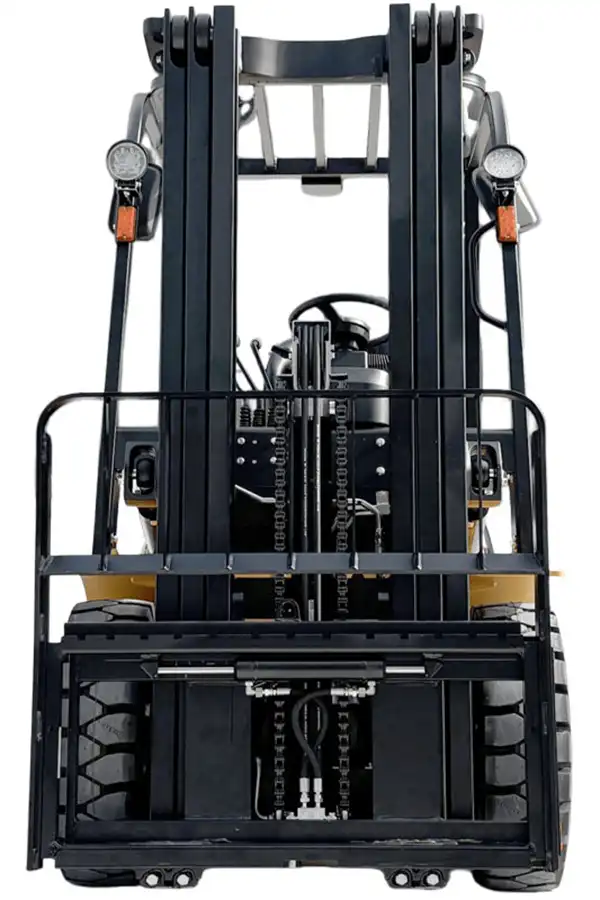
·Outer mast
·Middle mast
·Inner mast
Three-stage masts are typically all full free lift designs.
Features
·Free lift height around 900mm
·Suitable for containers and low-clearance warehouses
·Suitable for higher racking systems
·Lift height generally between 4~6m
Advantages
·Better balance between compact lowered height and high lift capability
·Widely used in warehouses and logistics centers
Wide-View Mast Design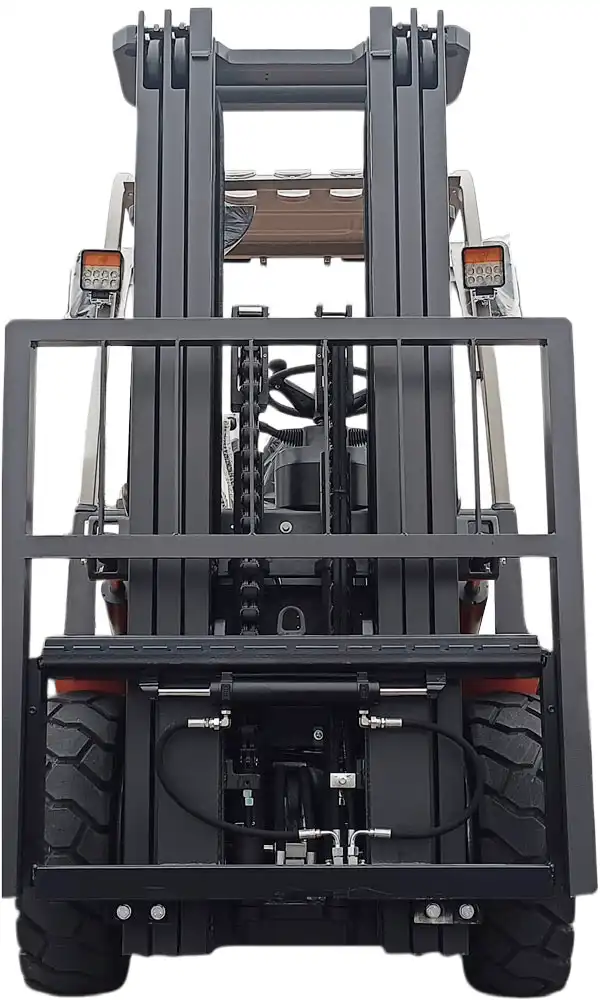
When lift height exceeds 6 meters, the center lift cylinder may obstruct forward visibility.
To solve this problem, some forklifts use:
·Dual front lift cylinders
Instead of one large center cylinder, two smaller cylinders are mounted on both sides of the mast.
This design is commonly called: Wide-View Mast Design
Advantages:
·Improved visibility
·Safer high-level stacking
·Better operator comfort
3.4 Quad (Four-Stage) Mast
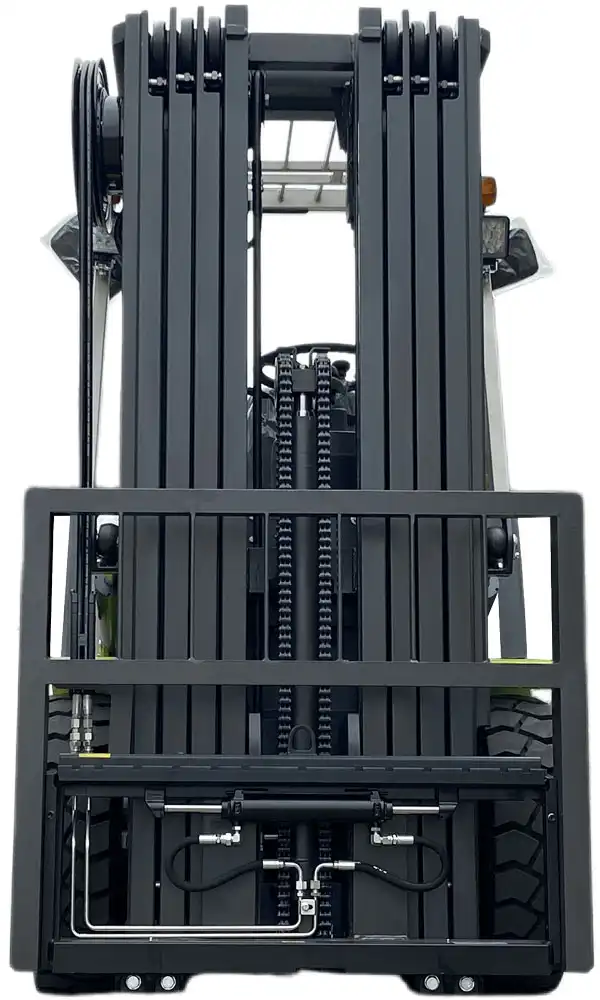
A four-stage mast is used when:
·Lift heights above 6 meters
·Warehouses with low door heights
Features
·High lifting capability
·Excellent passing clearance
·Compact lowered mast height
Limitations
·More complex structure
·Reduced forward visibility
·Higher cost
4.Typical Mast Selection Cases
Case 1
Daily loading and unloading, lift height 3–4m, no height restrictions
Recommendation:
Choose a 2-stage standard mast (3m or 4m).
Advantages:
·Better visibility
·Lower cost
·Simple maintenance
Case 2
Need to enter containers regularly
Recommendation:
Choose a 2-stage full free lift mast.
Requirements:
Lowered mast height must be lower than container door height
Advantages:
·Suitable for container operations
·Prevents mast collision with container ceiling
Case 3
Required lift height: 4.5m–6m
Recommendation:
Choose a 3-stage full free lift mast.
Why?
Although a 2-stage mast offers better visibility and lower cost, its lowered height is often too high for container shipment, requiring mast removal during transport.
A 3-stage mast provides:
·Better transport convenience
·Lower lowered height
·Higher lifting capability
Case 4
Required lift height: 6m, warehouse door height only 2.3m
Recommendation:
Choose a 4-stage 6m mast.
Advantages:
·Lowered mast height can be as low as 2.2m
·Meets both lifting and clearance requirements
5.Final Thoughts
Choosing the right forklift mast is not only about lift height. You must also consider:
·Warehouse door height
·Container operation requirements
·Visibility
·Transport limitations
·Cost
·Residual load capacity
A properly selected mast improves:
·Safety
·Efficiency
·Operator comfort
·Warehouse productivity
Before purchasing a forklift, always confirm:
·Lift height
·Lowered mast height
·Free lift height
·Whether the free lift is measured with or without load backrest
The right mast configuration can significantly improve your real-world operating performance.