What Is a Forklift OPS System? Working Principle and Functions
Safety features are becoming increasingly important in modern forklift operations. In addition to common safety equipment such as seat belts, overhead guards, warning lights, and area warning lights, many forklifts can also be equipped with an OPS system (Operator Presence System).
So, what is a forklift OPS system? How does it work, and what functions does it provide?
1. What Is a Forklift OPS System?
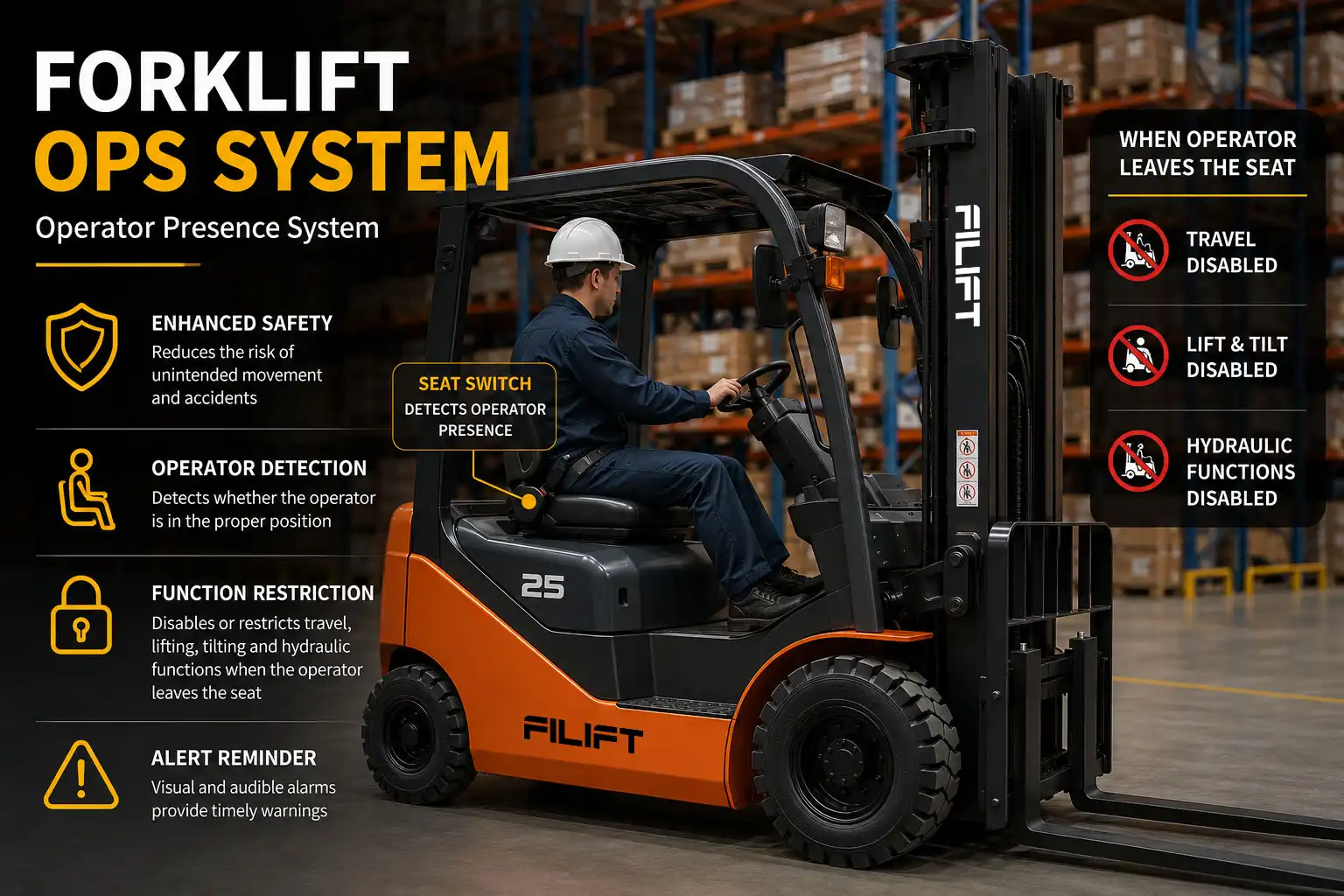
Forklift OPS System, short for Operator Presence System, is a safety system designed to detect whether the operator is in the proper operating position and, depending on the system design, restrict certain forklift functions when the operator leaves that position.
Its main purpose is to reduce the risk of unintended forklift movement or operation when the operator is not properly positioned at the controls.
In simple terms, the basic logic is:
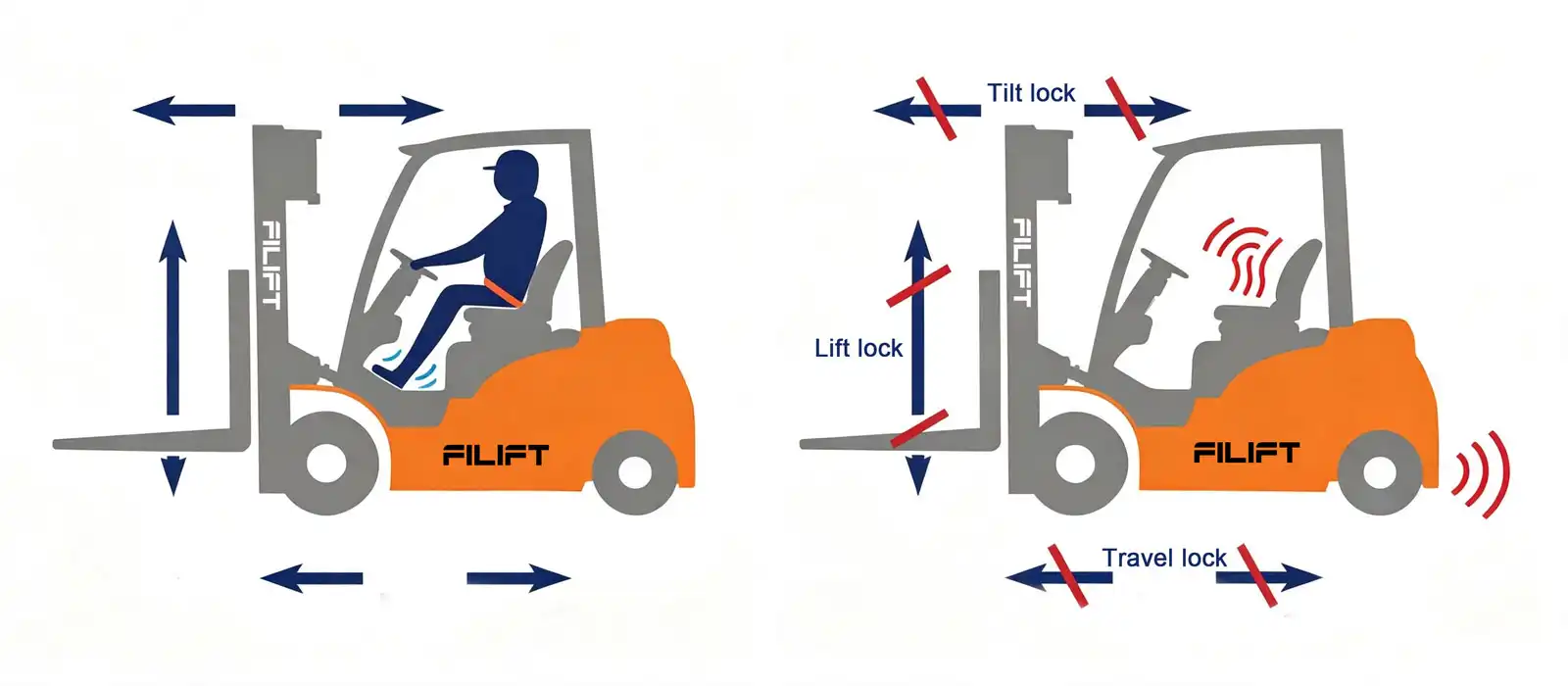
When the operator is not in the proper operating position, traveling, lifting & lowering, tilting functions are automatically disabled or restricted.
2. How Does a Forklift OPS System Work?
① Operator Presence Detection
On a seated forklift, a seat switch or pressure-sensitive sensor is typically installed under the operator's seat to detect whether the operator is sitting in the correct position.
On some stand-up forklifts and other material handling equipment, a presence switch may be installed around the operator platform or foot area instead.
② Signal Transmission
When the operator sits in the proper position, the presence switch is activated and sends an operator-present signal to the forklift's vehicle controller or control unit.
When the operator stands up or leaves the operating position, the switch changes state and sends an operator-absent signal to the controller.
③ Function Restriction
After detecting that the operator is no longer in the proper position, the control system can immediately lock the power and hydraulic systems.
3. Key Functions of a Forklift OPS System
Forklifts are frequently used in warehouses, factories, logistics centers, and other busy working environments. If a forklift remains operational after the operator leaves the seat, there is a potential risk of unintended movement or operation. An OPS system can help reduce these risks in several ways.
3.1 Travel Control
When the operator leaves the seat, an OPS system can disable the forklift's travel function.
Depending on the forklift's control system, this may include:
·Disabling forward and reverse travel
·Returning the transmission or travel control to a neutral state
·Preventing the forklift from moving until the operator returns to the proper operating position
This can help prevent unintended movement if the operator temporarily leaves the seat or accidentally operates a control while not properly positioned.
Important: An OPS system should not be considered a replacement for the parking brake. On many forklifts, leaving the seat does not automatically apply the parking brake. The operator should still follow the manufacturer's parking procedure, including applying the parking brake when required, especially when parking on an incline.
3.2 Load Handling Control
An OPS system can also restrict certain hydraulic functions when the operator leaves the operating position.
Depending on the forklift configuration, these functions may include:
·Fork lifting and lowering
·Mast forward and backward tilting
·Certain hydraulic attachment functions
For example, if the operator needs to lean out of the operating area to check a load or surrounding conditions, restricting hydraulic movement can help reduce the risk of unintended mast or attachment movement.
This is particularly useful when operating forklifts in confined warehouse aisles or around storage racks.
3.3 Warning and Reminder Functions
Some OPS systems also work together with the forklift's instrument panel and audible warning system.
For example, when the operator leaves the seat, the forklift may:
·Display an OPS warning indicator
·Activate an audible alarm
·Keep certain functions disabled until the operator returns to the proper position
On some models, the system may also require the travel control to be returned to neutral before the forklift can operate again. This helps reduce the possibility of unintended movement when the operator gets back on the forklift.
The exact warning and reset logic depends on the forklift manufacturer and control system.
4. Which Forklifts Can Use an OPS System?
OPS systems can be applied to various types of powered industrial trucks and material handling equipment, including:
·Diesel forklifts
·Electric forklifts
·LPG forklifts
·Reach trucks
·Other powered industrial trucks
However, not every forklift comes with an OPS system as standard. Whether OPS is available, and which functions it controls, depends on the forklift model, manufacturer, and control system.
5. Is an OPS System Necessary for Your Forklift?
Whether you need an OPS system depends on several factors, including the working environment, local regulations, applicable safety standards, and the requirements of the end user.
For forklifts operating frequently in warehouses, logistics centers, factories, and other busy work environments, an OPS system can be a valuable additional safety feature.
When purchasing a forklift, buyers should consider not only the capacity, lift height, mast type, tires, engine or battery, but also available safety features such as OPS.
It is also important to ask the supplier exactly which forklift functions are restricted by the OPS system, because the functionality can vary between models and manufacturers.
OPS systems are particularly common on forklifts supplied to markets with strict workplace safety requirements, such as Europe and North America. However, the specific requirements vary by country, application, and applicable safety standards. Therefore, buyers should confirm the safety requirements that apply to their particular market and application before selecting a forklift configuration.
Conclusion
A Forklift OPS System (Operator Presence System) is a safety system that detects whether the operator is in the proper operating position and can restrict certain forklift functions when the operator leaves that position.
Depending on the forklift model, an OPS system may restrict travel, lifting, lowering, tilting, and certain attachment functions, while also providing visual or audible warnings.
For businesses that prioritize workplace safety, especially in demanding warehouse and industrial environments, OPS can be an important safety option when selecting the right forklift.