How to choose the right forklift attachments?
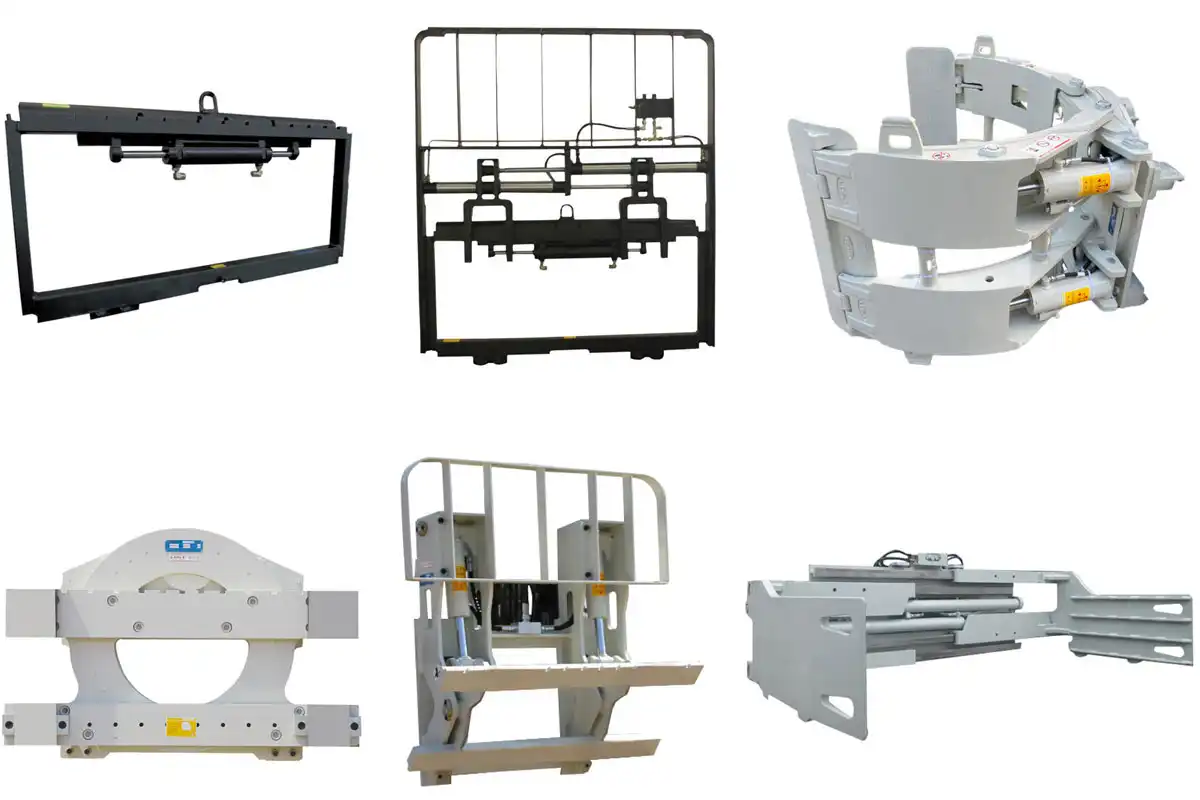
A standard forklift is typically equipped with a pair of forks, which are suitable for handling conventional palletized goods. However, by installing attachments, a forklift can either work in combination with the forks or replace them entirely, allowing it to handle non-standard loads more efficiently.
This is especially useful for goods that are not palletized, such as paper rolls, bales, cartons, drums, and more. With the help of attachments, forklifts can perform a variety of functions including clamping, rotating, dumping, and positioning.
In real-world sales scenarios, we often find that many customers are unsure how to select the right attachment for their needs. In this guide, we'll introduce some of the most common forklift attachments and their applications, helping you make the right choice when purchasing your forklift.
Note: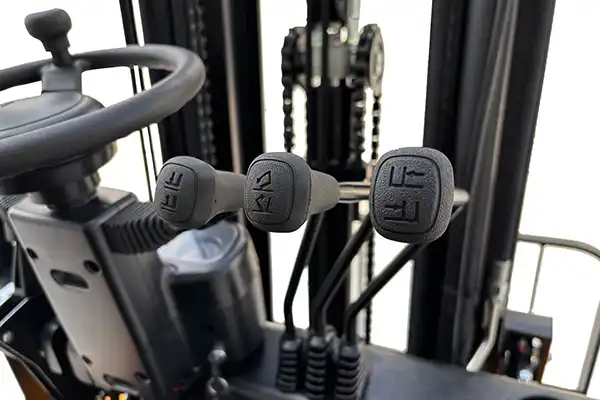
A standard forklift is equipped with two hydraulic control lever:
·Mast lifting/lowering
·Mast tilting (forward/backward)
Additional hydraulic control lever & valves are required when installing attachments.
1. Side Shifters
A side shifter (also called side shift) is the most common forklift attachment—around 90% of forklifts are equipped with it.
Without a side shifter, operators must repeatedly reposition the entire forklift to align with loads. With a side shifter, the forks can move left and right (typically about ±100 mm for a 3-ton forklift), allowing precise positioning without moving the truck.
Benefits: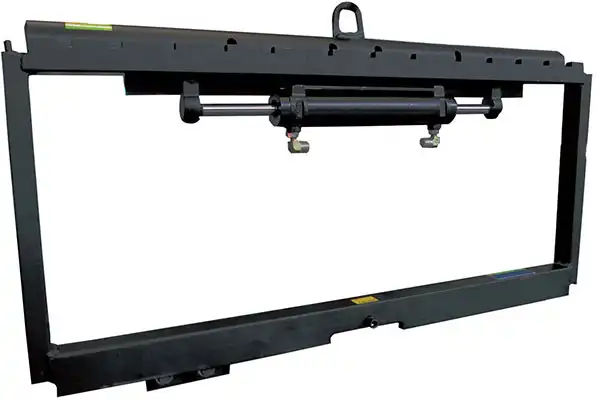
·Improved operational efficiency
·Reduced handling time
·Lower operator fatigue
Ideal Applications:
·Containers
·Narrow warehouse aisles
·High-racking storage systems
2. Side Shifter and Fork Positioner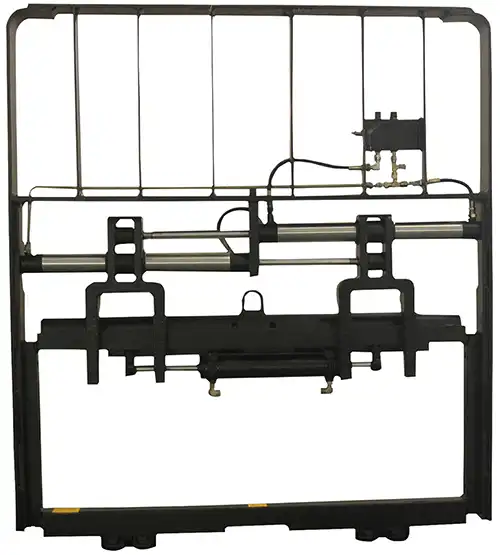
This attachment combines side shifting with fork positioning.
In addition to moving left and right, it allows the operator to quickly adjust the distance between forks to accommodate different pallet sizes—without leaving the seat.
Benefits:
·Faster load handling
·Greater flexibility for mixed pallet sizes
·Reduced manual adjustment
3. Paper Roll Clamp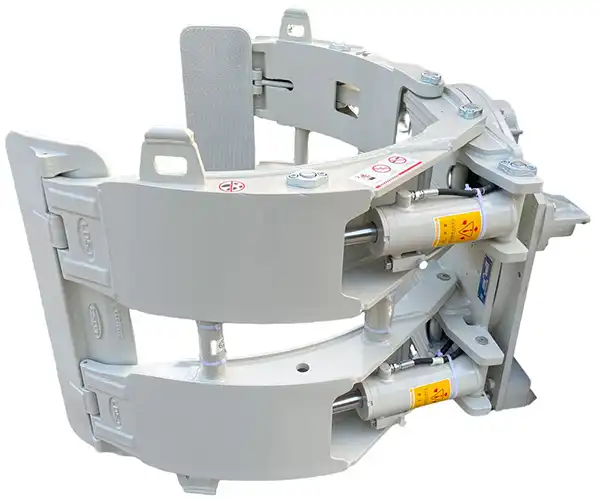
Paper roll clamps are widely used in the paper manufacturing industry for handling paper rolls. With specially designed curved arms, they can securely grip rolls without damage while allowing 360° rotation.
How to Choose the Right Paper Roll Clamp?
Key factors:
·Maximum roll weight
·Minimum and maximum roll diameter
When Do You Need Rubber Pads? (Very Important)
Rubber pads (rubber-facing contact pads) play a critical role in protecting paper rolls and improving grip. It allows you to reduce clamping pressure while maintaining grip—this significantly lowers the risk of damaging the paper roll.
You should choose rubber pads if: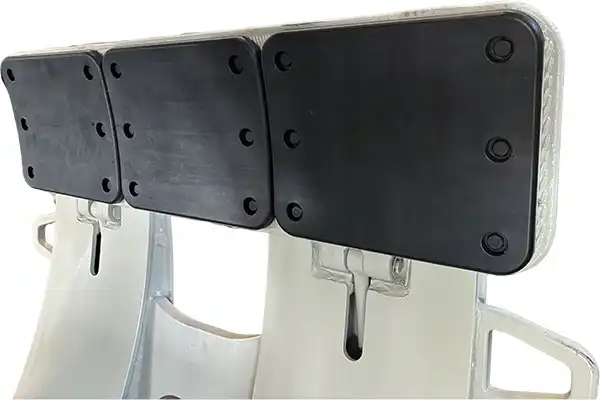
·You are handling high-value finished paper (e.g., coated paper, printing paper, tissue rolls)
·The rolls have strict surface quality requirements
·Rolls are small, lightweight, or poorly wrapped
·You need higher friction to prevent slipping
You may NOT need rubber pads if:
·You are handling industrial or raw paper (e.g., kraft paper, corrugated base paper)
·Surface damage is not a concern
·Rolls are large and heavy with good stability
Two types of clamp:
·Short arm is adjustable
·Short arm is unadjustable
Paper roll clamps typically have a long arm and a short arm. For small diameter rolls (usually below 400 mm), the short arm should be adjustable.
How to adjust:
·Rotate the clamp to approximately 45°
·Operate the hydraulic valve to control the short arm
4. Bale Clamp
Bale clamps are designed to handle various types of baled materials without pallets.
Common Industries:
·Recycling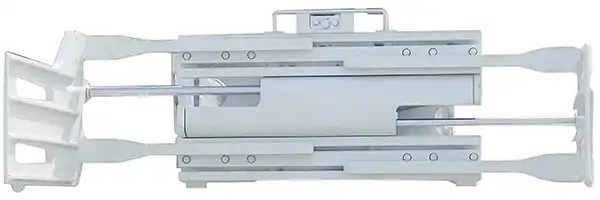
·Paper
·Textile
Suitable Materials:
Cotton, wool, textile fibers, hay, rags, and recycled clothing.
How to Choose the Right Bale Clamp:
·Maximum load weight
·Clamp opening range
5. Carton Clamp
Carton Clamp (also known as Refrigerator Clamp / Box Clamp) is designed to grip palletless packaged goods such as cartons, home appliances and furniture for clamping, lifting, transporting and stacking operations, eliminating the need for pallets.
Benefits: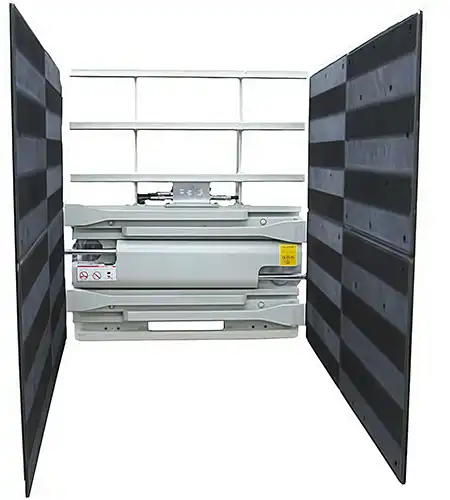
·Eliminates the need for pallets
·Maximizes container space utilization
Reduces packaging costs
How to Choose the Right Carton Clamp:
·Maximum load weight
·Clamp opening range
6. Rotators
Rotators allow the forks (or attachment) to rotate 360°.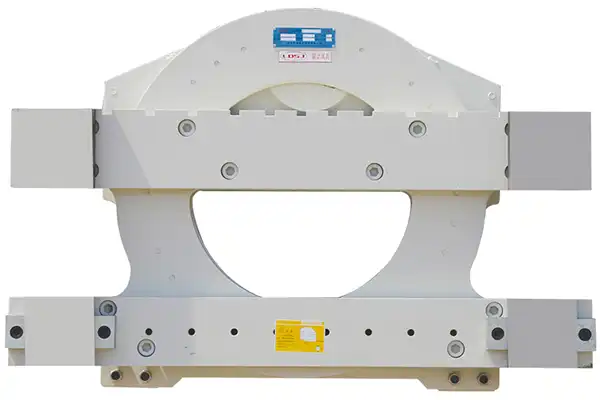
They are commonly used for emptying containers by inverting or dumping materials.
Typical Applications:
·Waste handling
·Food processing
·Manufacturing
7. Block Clamp
Block clamps are designed for safely handling bricks, concrete blocks, and other construction materials without pallets.
Features: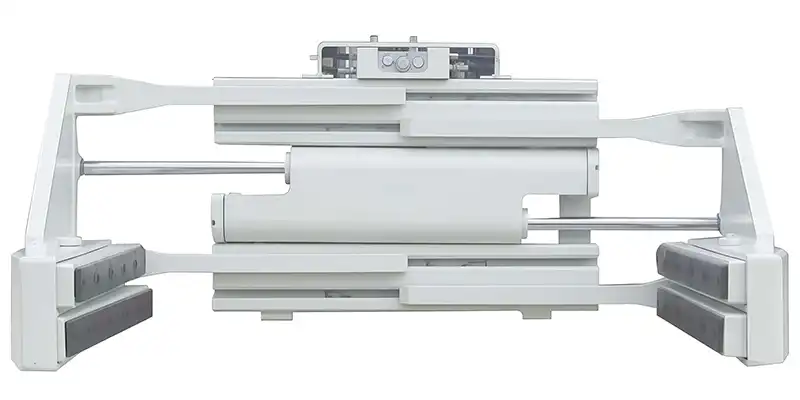
Side-shifting clamp arms for smooth operation
High strength and wear resistance
Long service life
Common Applications:
Construction materials industry
Metallurgy
Handling cement blocks, concrete blocks, carbon blocks
How to Choose the Right Block Clamp:
·Maximum load weight
·Clamp opening range
·Material type (to determine pad surface and grip pressure)
8. Single-Double Pallet Handler
This attachment allows a forklift to handle one or two pallets at the same time.
When extended: carries two pallets simultaneously
When retracted: operates like a standard fork
Benefits: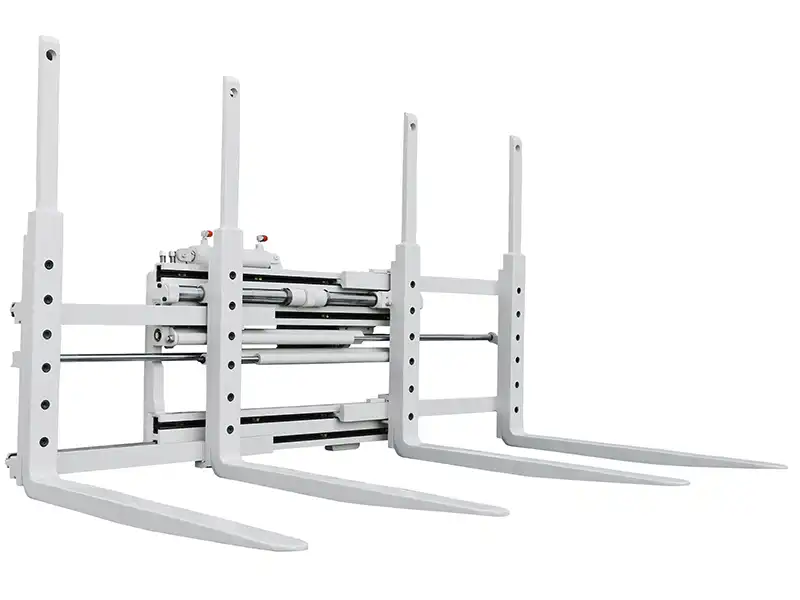
·Doubles handling efficiency
·Ideal for high-volume logistics
Typical Applications:
·Beverage industry (e.g., bottled drinks)
·Container loading/unloading
·Warehouse distribution
How to Choose the Right Pallet Handler:
·Load weight per pallet
·Pallet size and spacing
·Required load center
9. Hinged Forks (Dumping Forks)
Hinged forks allow operators to tilt forward and dump bulk materials safely and efficiently.
When equipped with a bucket, they can handle loose materials such as: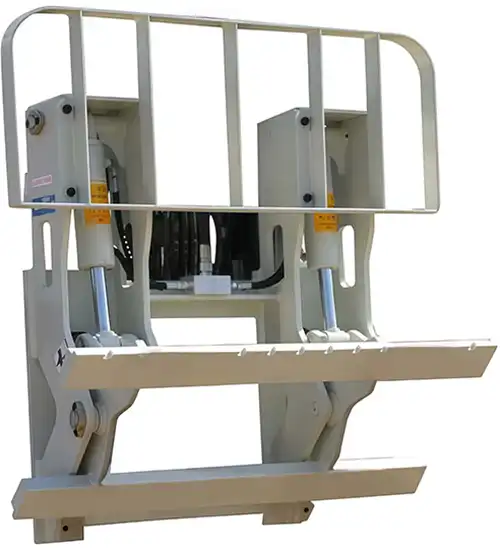
·Sand
·Coal
·Grain
·Fertilizer
·Soil
·Debris
How to Choose the Right Hinged Forks:
·Maximum load capacity
·Bucket size (if applicable)
·Material type (to ensure proper design and durability)
Common Mistakes When Choosing Forklift Attachments
Many buyers focus only on price, but overlook key technical factors. Here are some common mistakes to avoid:
·Ignoring hydraulic requirements
→ Not checking if the forklift has enough valves for the attachment
·Choosing based only on capacity
→ Ignoring load size, shape, and working conditions
·Not considering surface protection
→ Especially critical for paper rolls and cartons
·Underestimating working environment
→ Narrow aisles, containers, and high racks require specific attachments
·Over-specifying attachments
→ Leads to unnecessary cost without real efficiency gain
Conclusion
Choosing the right forklift attachment is not just about functionality—it directly impacts your efficiency, safety, and operating costs.
Before making a decision, always evaluate:
·Material type
·Load weight and dimensions
·Surface protection requirements
·Working environment
·Handling frequency
The right attachment can transform your forklift into a highly efficient, multi-functional handling solution.
If you're not sure which attachment is best for your application, feel free to contact us—we'll help you find the most suitable and cost-effective solution. Our Whatsapp:+86 13586832334, Email: stefan@filift.com.