How to Read a Forklift Load Capacity Chart?
A forklift load capacity chart is one of the most important safety documents provided by the manufacturer. It is usually attached near the operator's seat or on the mast. If the chart is missing, you should contact the manufacturer for a replacement.
The capacity chart shows the maximum safe load a forklift can handle under different operating conditions, including lift height, load center distance, tire configuration, and attachments.
When people refer to a 3-ton forklift, the "3 tons" refers to its rated lifting capacity, not the weight of the forklift itself. However, this rated capacity only applies under specific conditions. As the lift height increases or the load center moves farther away, the actual lifting capacity decreases.
Understanding the load chart is therefore essential for safe forklift operation.
Main Components of a Forklift Load Capacity Chart
A typical load capacity chart contains the following key elements:
1. Load Capacity
Load capacity refers to the maximum weight the forklift can safely lift under specified conditions. It is usually expressed in Ton(T), kilograms (kg) or pounds (lb).
2. Lift Height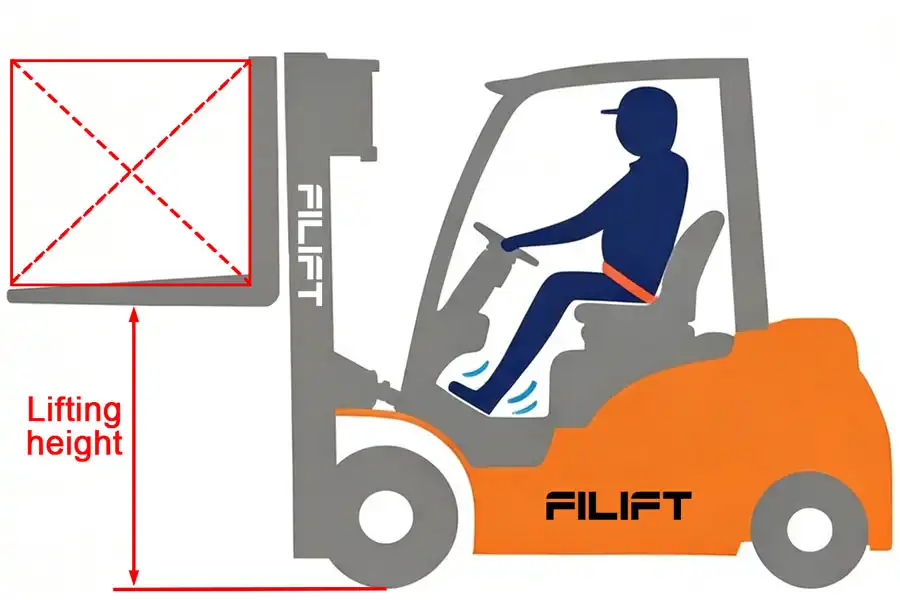
Lift height is the maximum height at which the load will be raised, normally from 3m ~ 6 m. Generally speaking, the higher the lift height, the lower the allowable load capacity.
3. Load Center Distance
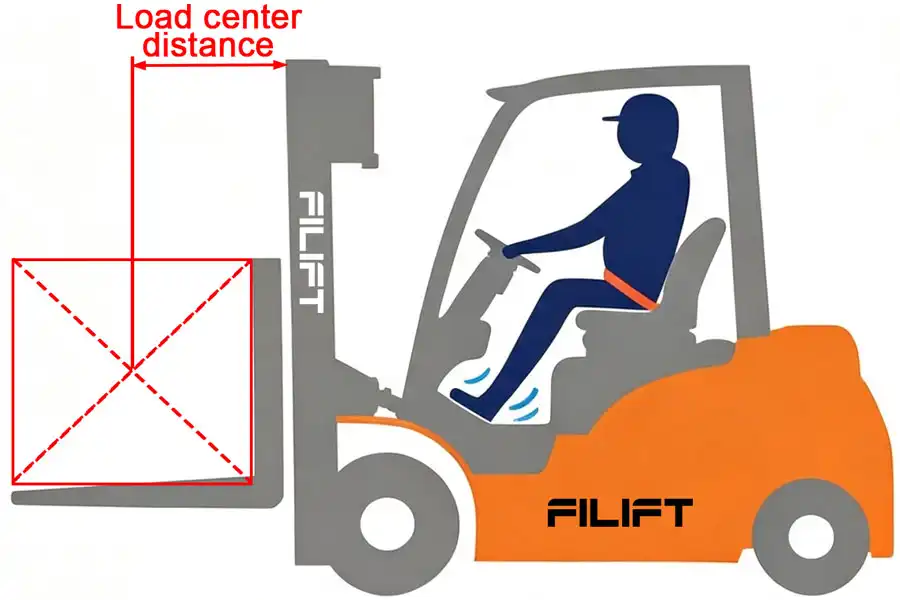
The load center is the distance from the fork face to the load's center of gravity.
For example:
·A standard palletized load is typically rated at a 500 mm load center.
·Longer or irregularly shaped loads may have a load center of 600 mm, 800 mm, or even greater.
As the load center increases, the load moves farther away from the forklift's stability triangle, reducing the forklift's lifting capacity.
4. Tire Configuration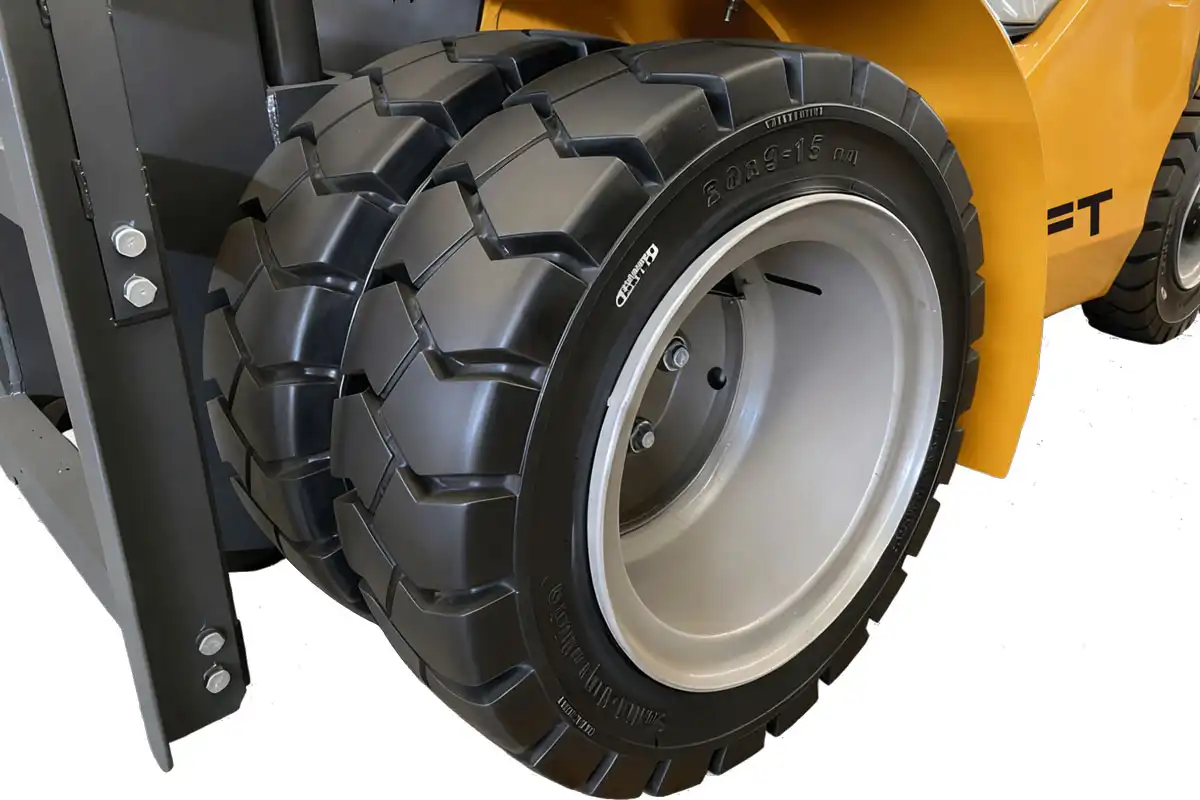
Some forklifts can be equipped with either:
·Single front tires
·Dual front tires (double tires)
For forklifts below approximately 5 tons, single front tires are typically standard. Installing dual front tires increases stability and allows the forklift to achieve greater lift heights and higher capacities under certain conditions.
5. Forklift Attachments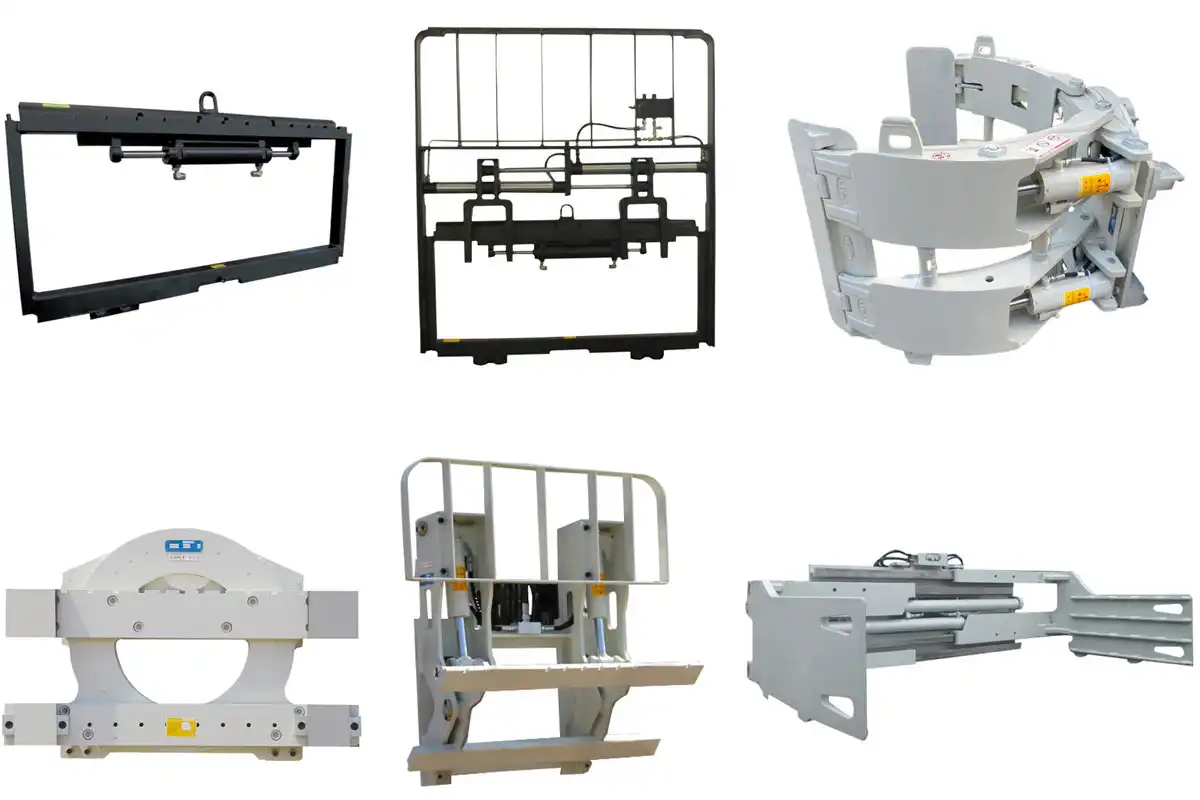
Attachments such as:
·Side shifters
·Fork positioners
·Paper roll clamps
·Bale clamps
can reduce the forklift's effective lifting capacity.
This happens for two reasons:
·The attachment itself adds weight to the forklift.
·The attachment often increases the load center distance, creating a larger overturning moment.
For this reason, forklifts equipped with attachments usually have a lower rated capacity than standard models.
Example: Reading a 3-Ton Forklift Load Capacity Chart
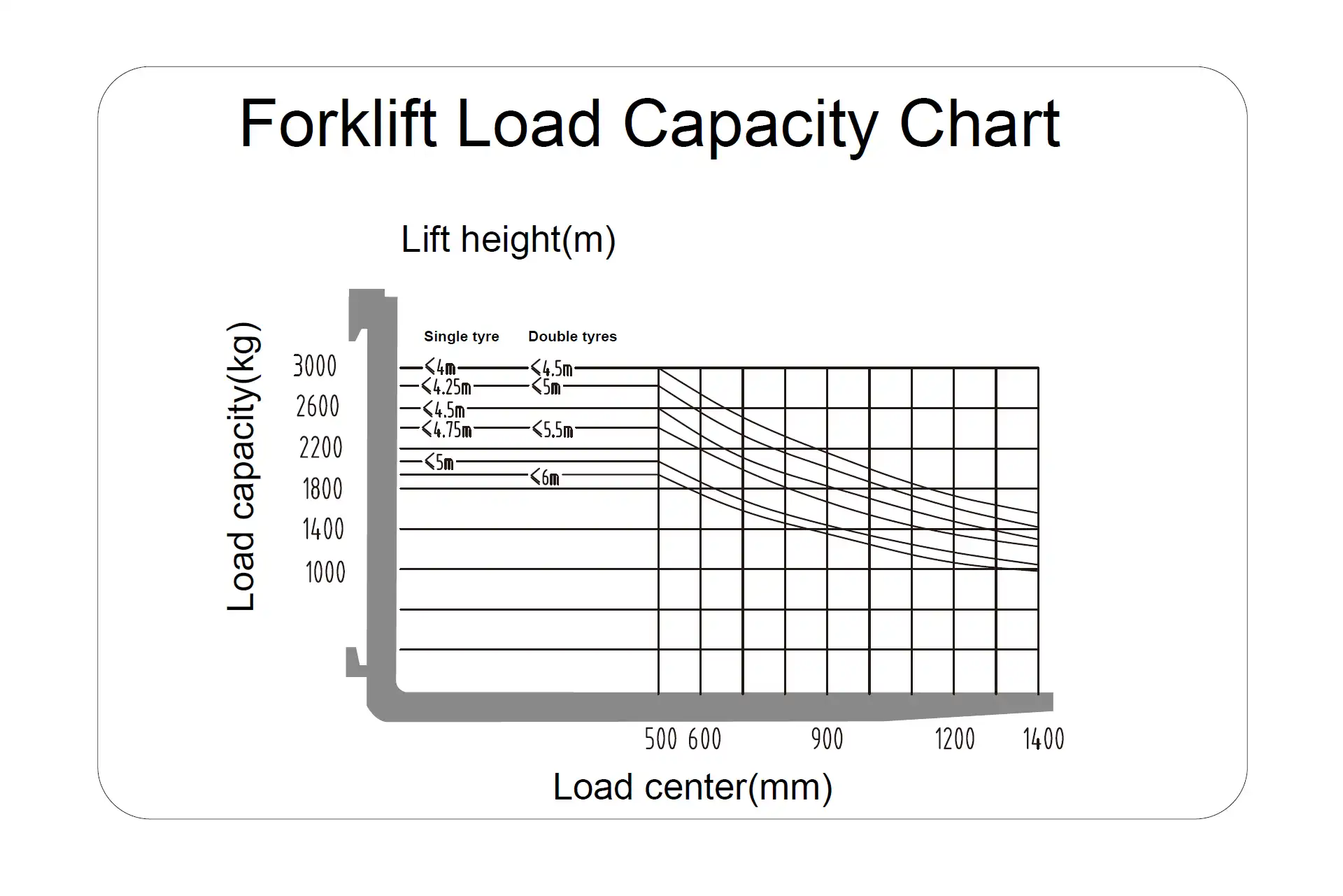
The chart below shows the load capacity of a 3-ton forklift under different lift heights, load centers, and tire configurations. 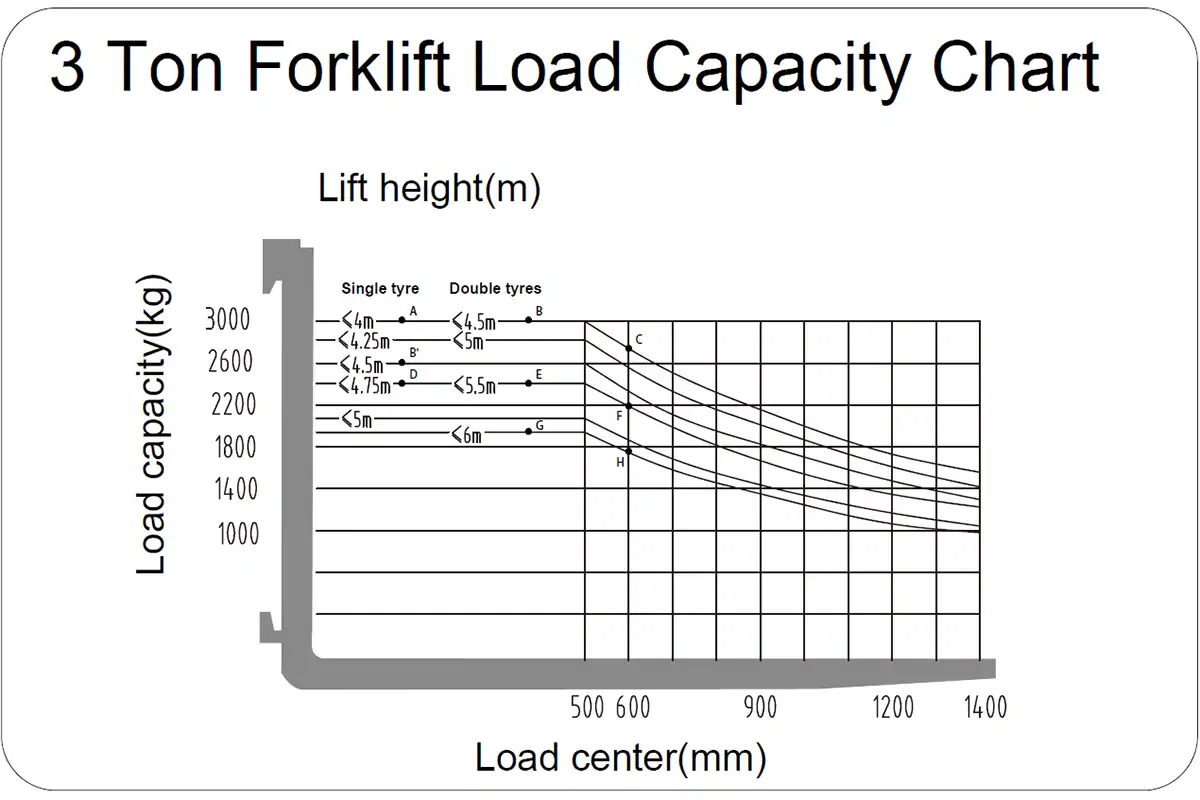
Point A:
·Load center: 500 mm
·Capacity: 3,000 kg
·Single front tires
·Lift height: 4.0 m
This represents the forklift's full rated capacity under standard operating conditions.
Point B:
·Load center: 500 mm
·Capacity: 3,000 kg
·Dual front tires
·Lift height: 4.5 m
With dual front tires, the forklift can maintain its full 3-ton capacity at a greater lift height.
Point B':
·Load center: 500 mm
·Single front tires
·Lift height: 4.5 m
·Capacity: 2,600 kg
Compared with Point B, the lack of dual tires reduces the allowable load capacity at the same height.
Point C:
·Load center: 600 mm
·Lift height: 4.0 m (single tires) or 4.5 m (dual tires)
·Capacity: approximately 2,700 kg
Increasing the load center from 500 mm to 600 mm reduces capacity even though the lift height remains unchanged.
Point D:
·Load center: 500 mm
·Single front tires
·Lift height: 4.75 m
·Capacity: 2,400 kg
Compared with Point A, the additional lift height results in a lower capacity.
Point E:
·Load center: 500 mm
·Dual front tires
·Lift height: 5.5 m
·Capacity: 2,400 kg
Even with dual tires, capacity decreases as lift height increases.
Point F
·Load center: 600 mm
·Lift height: 4.75 m (single tires) or 5.5 m (dual tires)
·Capacity: approximately 2,200 kg
This point illustrates the combined effect of increased lift height and a larger load center.
Point G:
·Load center: 500 mm
·Dual front tires
·Lift height: 6.0 m or above
·Capacity: approximately 1,900 kg
At very high lift heights, the forklift's capacity drops significantly, even when equipped with dual tires.
Point H:
·Load center: 600 mm
·Dual front tires
·Lift height: 6.0 m
·Capacity: approximately 1,700 kg
A larger load center further reduces capacity at high lift heights.
Key Takeaways
Several important conclusions can be drawn from this chart:
·The higher the lift height, the lower the lifting capacity.
·The larger the load center distance, the lower the lifting capacity.
·Dual front tires can improve stability and help maintain capacity at greater lift heights.
·Attachments often reduce effective capacity and should always be considered when calculating safe loads.
·Never assume a forklift can always lift its rated capacity. The actual allowable load depends on the specific operating conditions shown on the capacity chart.
In practice, once you know any three of the following factors:
·Lift height
·Load center distance
·Tire configuration
·Load capacity
you can use the capacity chart to determine the fourth value and verify whether the lifting operation can be performed safely.
FAQ
Q: Can a 3-ton forklift always lift 3 tons?
No. A 3-ton forklift can lift 3,000 kg only under its rated conditions, typically at a 500 mm load center and a specified lift height. If the load center increases or the lift height becomes greater, the actual capacity will be reduced.
Q: Why does load capacity decrease as lift height increases?
As the load is raised higher, the forklift's center of gravity shifts and stability decreases. To prevent tipping, the allowable load capacity must be reduced.
Q: Does a side shifter reduce forklift capacity?
Yes. A side shifter adds weight and slightly increases the load center distance, which reduces the forklift's effective lifting capacity.