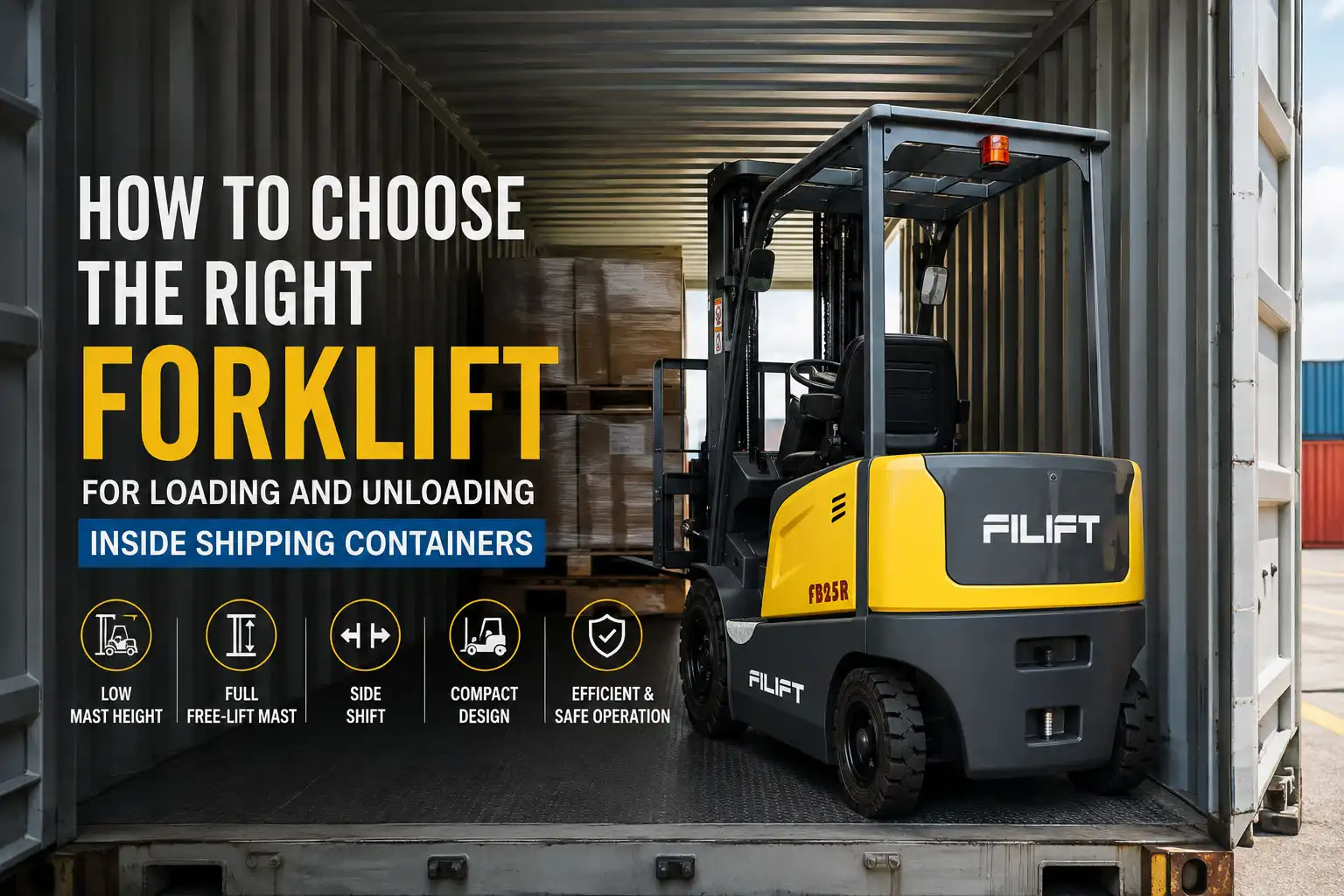
How to Choose the Right Forklift for Loading and Unloading Inside Shipping Containers?
In logistics and warehousing operations, loading and unloading cargo inside shipping containers is one of the most space-constrained and demanding material handling tasks. Standard shipping containers have limited internal height and width, making it difficult for conventional forklifts to enter and maneuver efficiently.
A forklift that is suitable for warehouse operations may not necessarily be suitable for container operations. The right configuration can have a direct impact on container turnaround time, labor efficiency, cargo damage, and operator safety.
This guide explains the key specifications and factors to consider when choosing a forklift for loading and unloading cargo inside shipping containers.
1. Five Key Specifications to Check
When selecting a forklift for container operations, several specifications are more critical than they are in conventional warehouse applications. The following five factors should be carefully checked before purchasing.
1.1 Mast Lowered Height
Mast lowered height is one of the first specifications to check when determining whether a forklift can enter a shipping container.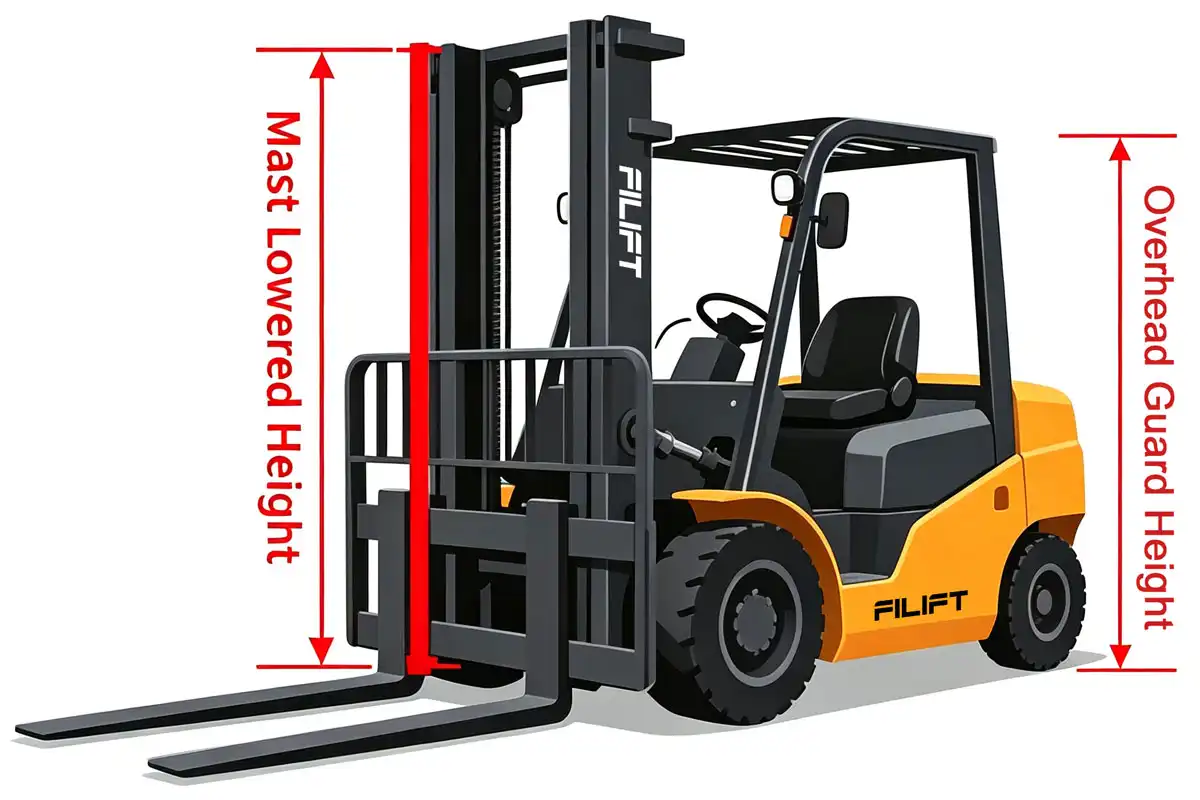
A standard 20-foot general-purpose container (20GP) has an internal height of approximately 2.39 m and a door opening height of approximately 2.28 m. A 40-foot high-cube container (40HQ) typically has an internal height of approximately 2.69 m and a door opening height of approximately 2.58 m.
Because the forklift must pass through the container door before it can operate inside, its overall lowered height must be lower than the actual door opening height, with sufficient clearance for safe entry.
For forklifts intended to enter both 20GP and 40HQ containers, a lowered height below approximately 2.24 m is commonly used as a design target, although the actual requirement depends on the specific container and forklift configuration.
1.2 Overhead Guard Height
The overhead guard is another important dimension when selecting a forklift for container operations.
For many 1.5–4 ton forklifts, the overhead guard height is around 2.2 m, which can provide sufficient clearance for entering a standard container. However, larger forklifts, particularly 5-ton and above models, normally have a greater overall height and may require a specially designed low-profile overhead guard.
For heavy-duty forklifts intended to enter 20GP containers, the overhead guard may need to be specially configured to keep its height below approximately 2.28 m.
1.3 Full Free-Lift Mast
A forklift intended for container operations should generally be equipped with a full free-lift mast, sometimes referred to as a container mast.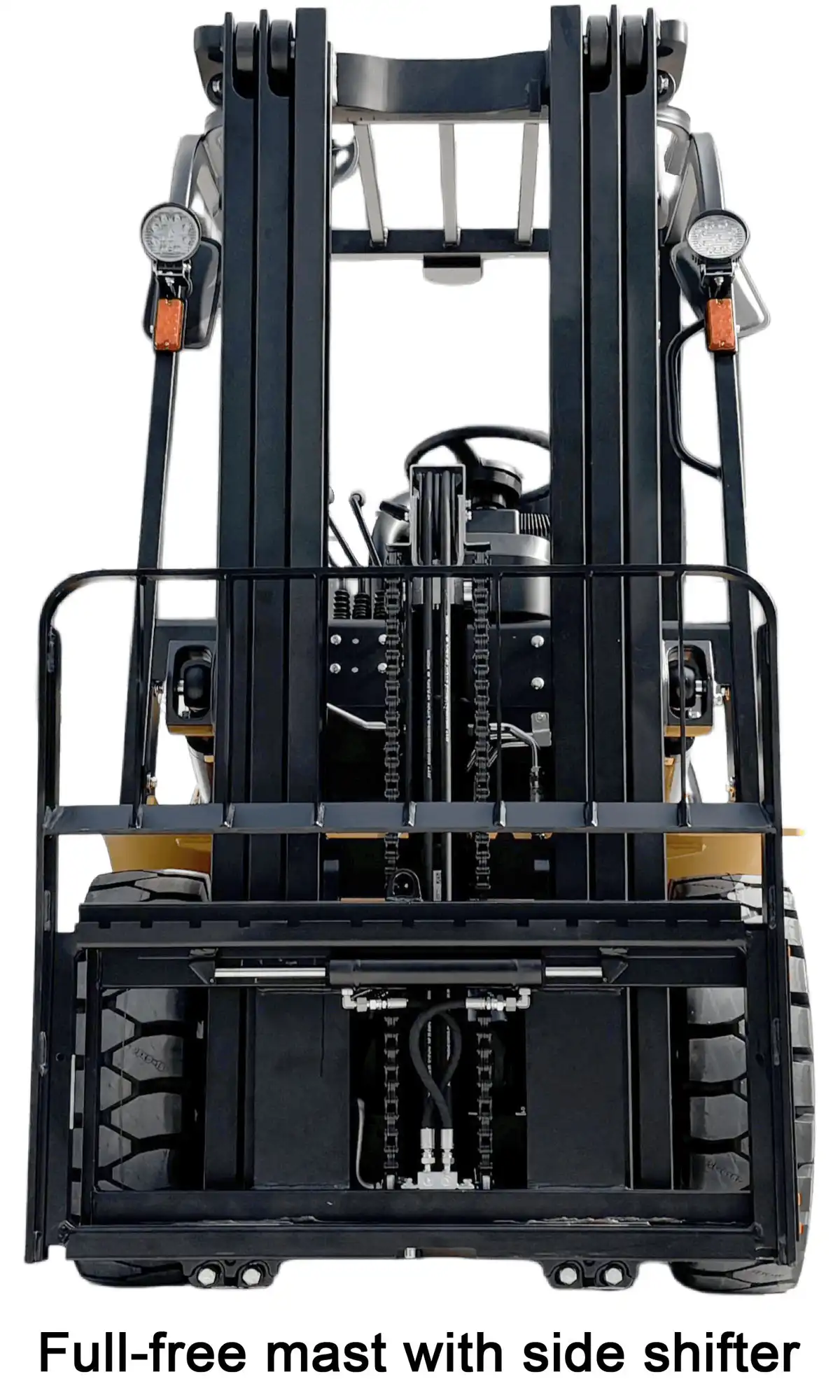
A full free-lift mast allows the forks to rise through the free-lift range before the mast's inner sections extend significantly upward. This is particularly useful in low-clearance environments because the operator can lift the load without immediately increasing the overall mast height.
This feature is especially important when stacking or positioning cargo inside a container, where the clearance between the mast and container roof is limited.
1.4 Side Shifter
Space is extremely limited inside a shipping container, so repeatedly repositioning the entire forklift can significantly reduce productivity.
A side shifter allows the operator to move the forks left or right without repositioning the entire truck. This makes it easier to align the forks with pallets and accurately position loads inside the container.
A side shifter can help:
·Reduce unnecessary forklift movement
·Improve pallet positioning accuracy
·Make better use of limited container space
·Reduce repositioning time
For frequent container loading and unloading, a side shifter is highly recommended and can be specified as standard equipment.
1.5 Ground Clearance and Gradeability
The transition between the loading dock and the container floor can sometimes involve a height difference or slope. The forklift therefore needs sufficient ground clearance and gradeability to enter and exit the container safely.
For container-entry applications, a ground clearance of around 100 mm or more and sufficient gradeability may be used as a design reference, but the actual requirement should be determined based on the specific loading dock, container floor, and transition angle.
The forklift should be able to pass over the transition without the chassis or undercarriage contacting the ground.
Note: Reach trucks and other narrow-aisle forklifts are generally designed for flat warehouse floors and may have lower ground clearance and gradeability than counterbalance forklifts. Therefore, they may not be suitable for directly entering a shipping container, especially where there is a significant height difference or ramp.
2. Forklifts for Container Operations: Internal Combustion vs. Electric
Both internal-combustion and electric forklifts can be used for container loading and unloading, but their suitability depends heavily on the working environment.
2.1 Internal Combustion Forklifts
Internal-combustion forklifts, including diesel, gasoline, and LPG models, are widely used for heavy-duty material handling.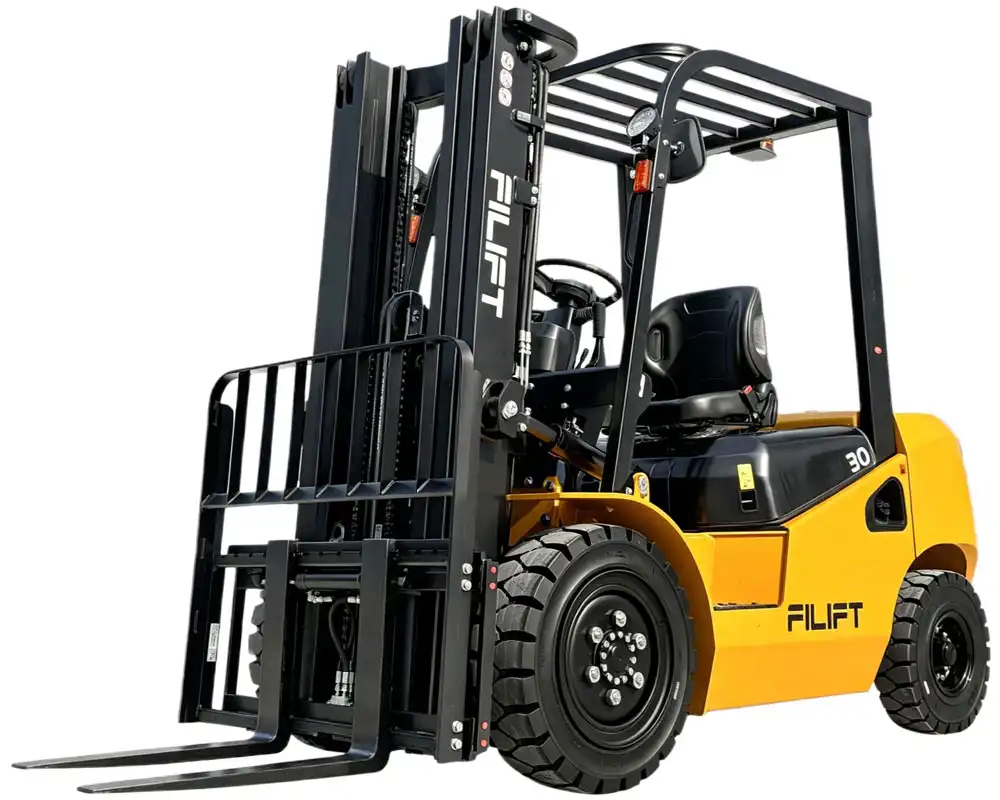
Advantages:
·Strong power and torque
·Good versatility for indoor and outdoor applications
·Stable counterbalance design
·Wide load-capacity range, typically from approximately 1.5 to 10 tons
·Suitable for heavy loads and demanding applications
A properly configured counterbalance forklift can drive directly from the ground into a shipping container and handle palletized cargo inside the container.
Disadvantages:
·Exhaust emissions require careful management
·Noise is higher than with electric forklifts
·Ventilation is critical when operating inside enclosed spaces
·Large-capacity models may require specially designed low-profile overhead guards
Internal-combustion forklifts should not be operated for extended periods in poorly ventilated or confined areas. Exhaust gases, including carbon monoxide, can accumulate and create serious health hazards. OSHA recommends avoiding prolonged operation of internal-combustion forklifts in confined areas and considering battery-powered forklifts where ventilation is inadequate.
Suitable applications:
·General palletized cargo
·Heavy-duty cargo
·Steel and machinery
·Construction materials
·Container loading and unloading where adequate ventilation is available
2.2 Electric Forklifts
Electric forklifts use battery power and are particularly suitable for indoor operations and applications where exhaust emissions are a concern.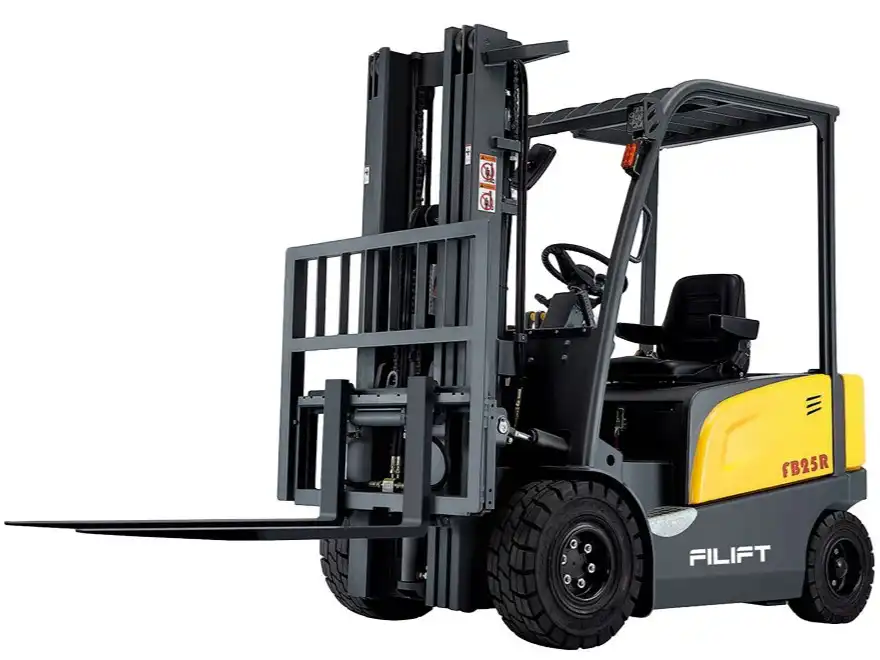
Advantages:
·No exhaust emissions during operation
·Low operating noise
·Smooth and precise control
·Well suited to indoor warehouses
·Lower routine maintenance requirements compared with many internal-combustion models
Because they do not produce engine exhaust, electric forklifts are often a preferred option for operations that involve working inside enclosed containers.
Disadvantages:
·Operating time is limited by battery capacity
·Heavy-duty applications may require opportunity charging or battery changes
·Initial purchase cost can be higher
Suitable applications:
·Food and beverage
·Pharmaceutical products
·Electronics and precision components
·Cold-chain and indoor logistics
·Warehouses where container loading and unloading is performed indoors
For operations involving frequent work inside enclosed containers, electric forklifts can provide a cleaner and more comfortable working environment.
3. Choosing the Right Capacity
The required forklift capacity should not be determined solely by the weight of a typical pallet. You should also consider load center and required safety margin.
1.5–1.8 Ton Class
Typical applications:
·Fast-moving consumer goods
·Clothing
·Pharmaceuticals
·Electronics and components
·Standard European or American pallets
Characteristics:
·Compact body
·Excellent maneuverability
·More available space inside the container
·Electric models are commonly used
Suitable for:
·Retail importers
·E-commerce warehouses
·Pharmaceutical distribution centers
2.0–3.5 Ton Class
Typical applications:
·Hardware and construction materials
·Industrial components
·Drummed goods
·High-density food products
Characteristics:
·One of the most versatile capacity ranges
·Good balance between load capacity and maneuverability
·Suitable for a wide range of standard container applications
Suitable for:
·Manufacturing plants
·Third-party logistics providers
·General warehouses
·Bonded warehouses
For many general cargo applications, 2–3.5 ton forklifts provide an excellent balance between capacity, size, and maneuverability.
4.0–5.0 Ton Class
Typical applications:
·Heavy machinery components
·Stone
·Steel products
·Large molds
·Heavy industrial equipment
Characteristics:
·High load capacity and stability
·Often equipped with solid tires and reinforced chassis
·Greater attention must be paid to overall width and container clearance
Suitable for:
·Heavy-industry companies
·Construction-material importers
·Large equipment manufacturers
7.0–10 Ton Class
Typical applications:
·Heavy machinery
·Large castings
·Complete industrial equipment
·Extremely heavy cargo
Characteristics:
·Heavy-duty configuration specifically designed for high-capacity applications
·Dual front tires may be used to increase load-bearing capability
·Low-profile overhead guards and specially configured masts may be required for container entry
Suitable for:
·Large industrial equipment exporters
·Heavy manufacturing companies
·Specialized heavy-cargo handling operations
For large-capacity forklifts, container compatibility must be confirmed carefully because the truck's overall width, weight, mast configuration, and overhead guard height can become limiting factors.
4. Recommended Forklift Specifications by Capacity
The following table provides a general reference for forklift configurations intended to enter both 20GP and 40HQ containers.
| Forklift Capacity | Mast Lowered Height | Overhead Guard Height | Max. Lift Height – Duplex | Max. Lift Height – Triplex |
| 1.5–1.8 t | < 2.24 m | 2.20–2.24 m | 3.5 m | 5.0 m |
| 2.0–2.5 t | < 2.24 m | 2.20–2.24 m | 3.5 m | 5.0 m |
| 3.0–3.5 t | < 2.24 m | 2.20–2.24 m | 3.3 m | 4.8 m |
| 4.0–5.0 t | < 2.24 m | 2.20–2.24 m | 2.6 m | 3.9 m |
| 7.0 t | < 2.24 m | 2.20–2.24 m | 2.4 m | 3.6 m |
| 10 t | < 2.24 m | 2.20–2.24 m | 2.1 m | — |
Some customers only need the forklift to enter only 40HQ high-cube containers. Since the door opening is higher, a greater overall lowered height can be acceptable.
| Forklift Capacity | Mast Lowered Height | Overhead Guard Height | Max. Lift Height – Duplex | Max. Lift Height – Triplex |
| 1.5–1.8 t | < 2.54 m | 2.50–2.54 m | 4.0 m | 5.5 m |
| 2.0–2.5 t | < 2.54 m | 2.50–2.54 m | 4.0 m | 5.5 m |
| 3.0–3.5 t | < 2.54 m | 2.50–2.54 m | 3.7 m | 5.5 m |
| 4.0–5.0 t | < 2.54 m | 2.50–2.54 m | 3.3 m | 5.0 m |
| 7.0 t | < 2.54 m | 2.50–2.54 m | 3.0 m | 4.0 m |
| 10 t | < 2.54 m | 2.50–2.54 m | 2.3 m | — |
Note: The mast is configured as a full free-lift mast. Actual specifications may vary by forklift model and manufacturer. Always verify the final dimensions against the actual container door opening.
5. Safety Considerations When Operating a Forklift Inside a Container
Container operations require additional attention to safety because the working space is enclosed and restricted.
5.1 Ventilation
When using an internal-combustion forklift, keep the container doors fully open and ensure adequate ventilation.
Exhaust gases can accumulate rapidly in confined spaces, particularly carbon monoxide. OSHA specifically warns against prolonged operation of internal-combustion forklifts in confined areas such as trailers and recommends considering battery-powered forklifts where ventilation is inadequate.
5.2 Drive Slowly
Visibility is limited and the available maneuvering space is narrow inside a container.
Operators should reduce speed, maintain control of the load, and use the horn when approaching areas where visibility is obstructed.
A fixed speed such as 5 km/h should not be treated as a universal legal limit; the actual operating speed should follow the site's risk assessment, local regulations, and forklift manufacturer's requirements.
5.3 Never Overload the Forklift
Never exceed the forklift's rated capacity.
Remember that the actual capacity depends on the load center, attachment, lifting height, and configuration, not just the nominal forklift capacity.
Because the working space inside a container is limited, a tip-over can have particularly serious consequences.
5.4 Inspect the Container Before Entry
Before driving the forklift into a container, inspect:
·Container floor condition
·Damaged or weakened floorboards
·Uneven surfaces
·Container door condition
·Door locking and securing mechanisms
·Loading dock and container transition
·Any obstacles or debris
The container floor must be capable of supporting the combined weight of the forklift and its load.
5.5 Keep Personnel Clear
Personnel should not stand inside the container while the forklift is loading or unloading cargo unless the operation has been specifically planned and controlled for their presence. Where visibility is restricted, a trained spotter may be used to guide the operator from a safe position.
5.6 Secure the Trailer or Loading Platform
Before the forklift enters a container positioned on a trailer or chassis, make sure the vehicle is properly secured.
The parking brake should be applied, and where required, wheel chocks or an approved dock-lock system should be used to prevent unintended vehicle movement.
A sudden movement of the trailer while the forklift is entering or leaving the container can create a serious tip-over hazard.
6. How to Choose the Right Forklift for Your Container Operation
The selection process can be simplified into several steps:
Step 1: Confirm the container type
Determine whether you need to work inside:
·20GP
·40GP
·40HQ
·Other special container types
Step 2: Check the actual door opening
Measure or confirm:
·Door opening height
Step 3: Determine the actual load requirements
Confirm:
·Maximum load weight
·Load center
·Required lifting height
Step 4: Select the forklift capacity
Choose a forklift with sufficient rated capacity and an appropriate safety margin based on the actual load center and lifting conditions.
Step 5: Confirm the forklift dimensions
Pay particular attention to:
·Overall lowered height
·Overhead guard height
Step 6: Select the mast configuration
For low-clearance container operations, a full free-lift mast is generally preferred.
Step 7: Choose the power source
Consider an electric forklift for indoor and enclosed applications, while internal-combustion forklifts may be suitable for heavy-duty applications where adequate ventilation is available.
Step 8: Add useful attachments
A side shifter can significantly improve positioning efficiency inside the confined space of a shipping container.
7. Final Thoughts
Loading and unloading cargo inside shipping containers is one of the most demanding forklift applications because the equipment must operate within strict height, width, and maneuverability limitations.
Choosing the right forklift can improve container turnaround efficiency, reduce unnecessary repositioning, minimize cargo damage, and improve operator safety.
The key selection process is:
Confirm the container dimensions → determine the load weight and load center → select the appropriate capacity → check mast lowered height and overhead guard height → choose a suitable mast configuration → select the appropriate power source → add a side shifter for more efficient load positioning.
For most general cargo applications, a 2–3 ton electric counterbalance forklift with a full free-lift triplex mast, and side shifter can provide an excellent combination of capacity, maneuverability, and suitability for indoor container operations.
If you are unsure which forklift configuration is right for your operation, provide the container type, maximum load weight, load center, required lifting height, and working environment. Contact us, FILIFT can help you select a forklift configuration that matches your actual container-loading requirements.