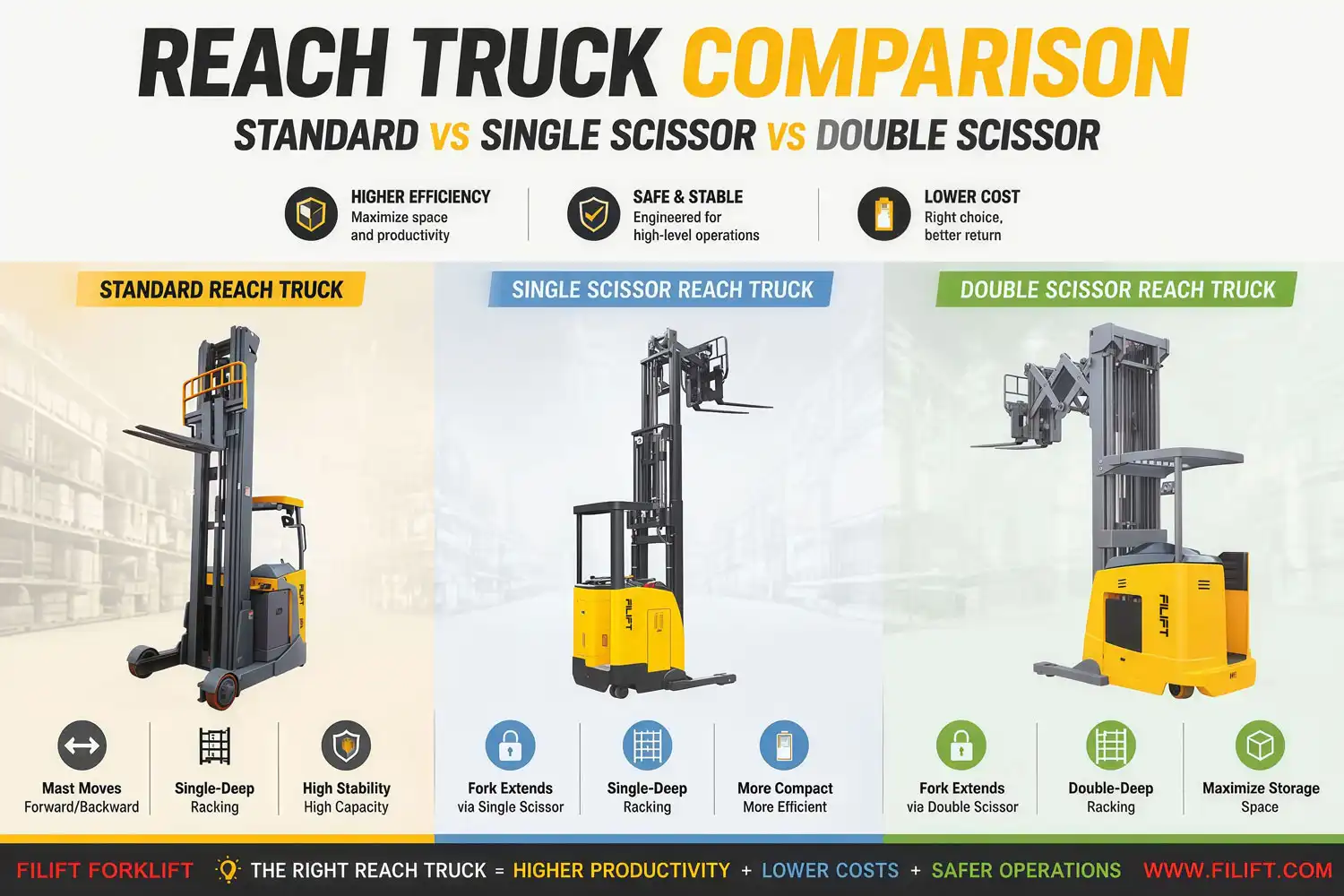
Standard Reach Truck vs Scissor Reach Truck (Single / Double Scissor): Differences & Selection Guide
In warehouse and narrow-aisle operations, the reach truck is one of the most widely used material handling machines. Its key advantage is simple but powerful:
it can access high-level racking without the need to drive deep into the aisle, significantly improving warehouse space utilization.
Based on different reach mechanisms, reach trucks on the market can be broadly divided into two categories:
1.Standard Reach Truck (Mast Reach Type / Non-scissor reach)
The entire mast and fork carriage move forward and backward as one unit. The mast slides along guide rails within the outrigger legs.
2.Scissor Reach Truck (Single / Double Scissor Fork Extension)
The mast remains fixed. Only the fork carriage extends forward through a scissor mechanism.
1. Core Structure & Reach Travel (Fundamental Difference)
1) Standard Reach Truck (Mast Moving Type)
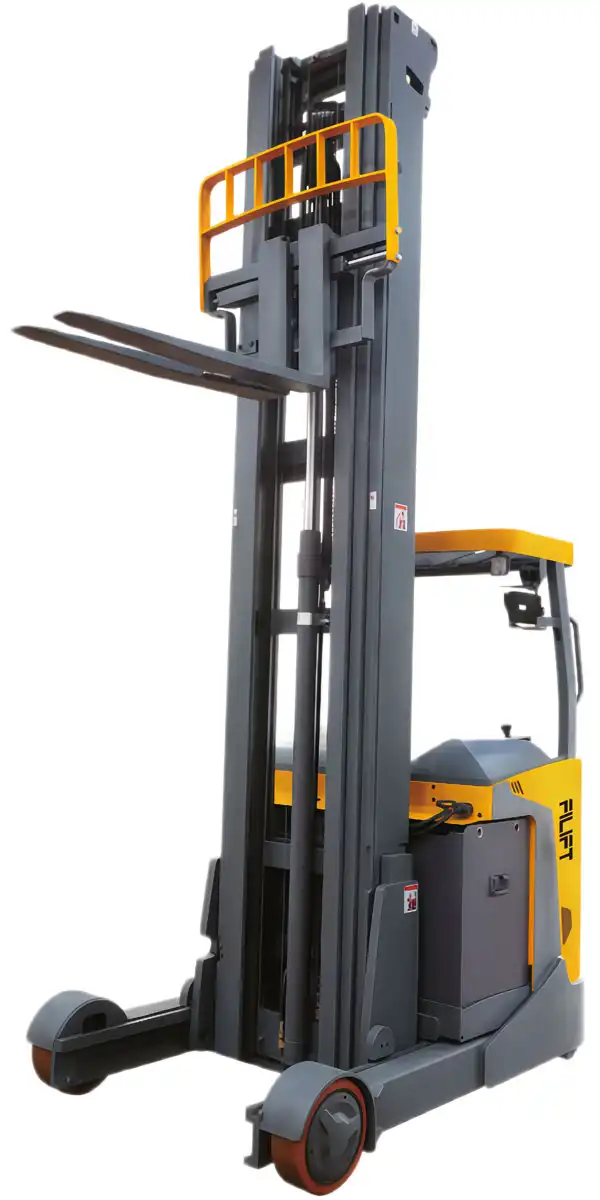
·Moving parts: Entire mast + fork carriage move together
·The mast travels forward along internal rail systems inside the outriggers
·Maximum reach distance: 450–600 mm (limited by mast rail design, cannot be extended significantly)
·Suitable for single-deep racking (first pallet position only)
·No scissor linkage system; relies on sliding rails + reach hydraulic cylinder
2) Single Scissor Reach Truck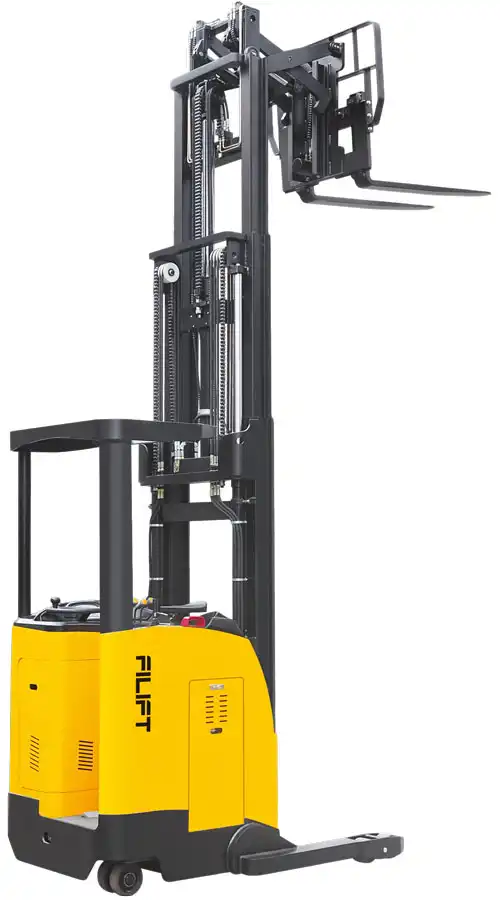
·Mast is fixed in position
·Fork carriage extends forward via a single-layer scissor mechanism
·Reach distance: around 500–600 mm
·Performance is similar to standard reach trucks in terms of reach distance
3) Double Scissor Reach Truck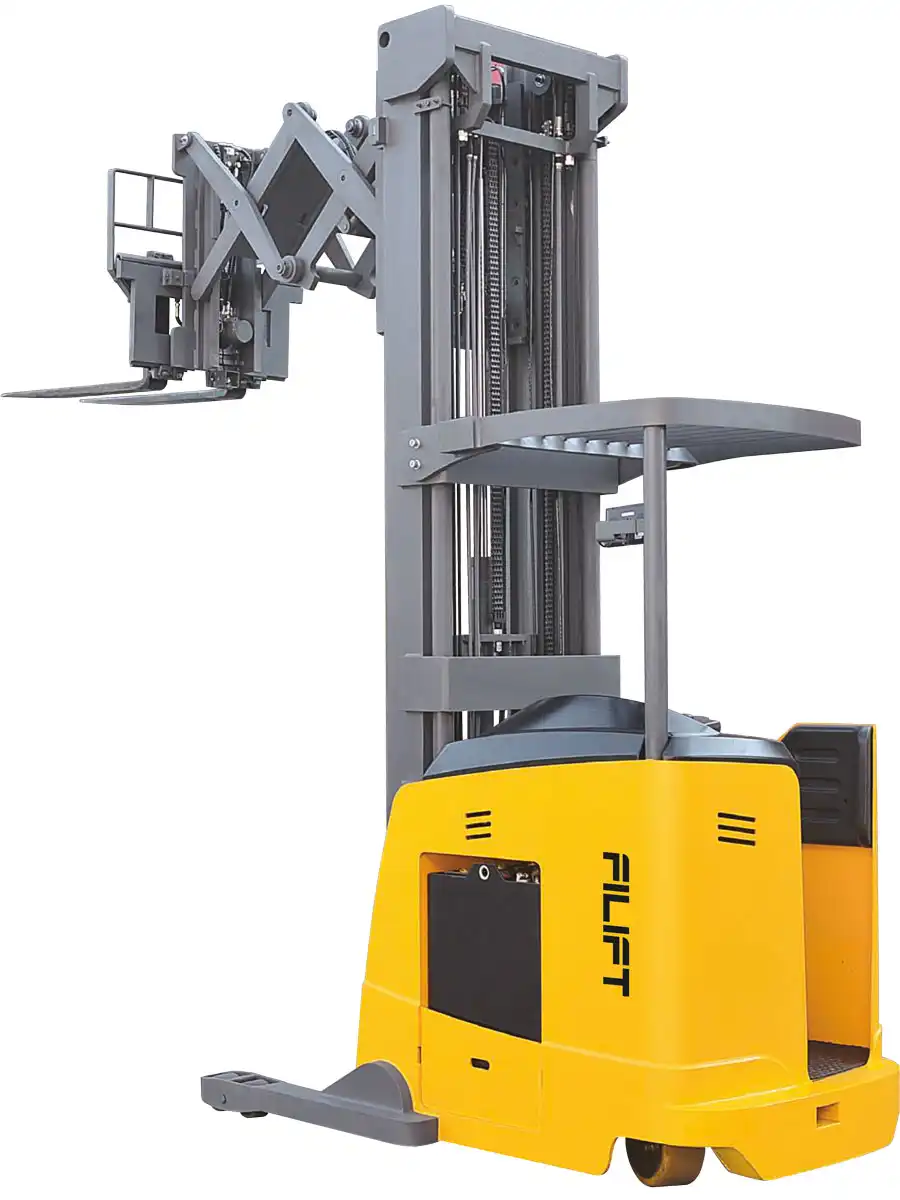
·Mast remains completely fixed during operation, improving body stability
·Fork carriage extends forward via a dual-layer scissor mechanism
·Forks can extend up to 1000–1200 mm
·Can access deeper pallet positions in double-deep racking systems
2. Load Capacity, Load Center & High-Level Stability
Advantages of Standard Reach Trucks
·When extending, the whole mast and load move together, but once retracted, the load center returns fully within the truck's support base
·Higher rated capacity under the same size class (commonly 2.0–2.5 tons)
·Best stability at high lifting heights (8–14 meters), with minimal sway
·Ideal for heavy-duty, high-rack stacking operations with the lowest tipping risk
Limitations of Scissor Reach Trucks
·Single scissor: Acceptable stability at short reach distances; Double scissor: When fully extended, only the fork tip carries the load → the center of gravity shifts significantly forward
·Rated capacity is reduced: Single scissor: ~1.6–2.0 tons; Double scissor: ~1.2–1.6 tons
·Increased sway at high lift heights, requiring speed reduction for safety
Simple Stability Logic
·Standard reach truck: Whole mast system moves → balanced counterweight system
·Scissor type: Only fork extends → load is suspended far forward
3. Aisle & Racking Compatibility (Key Selection Factor)
Standard Reach Truck
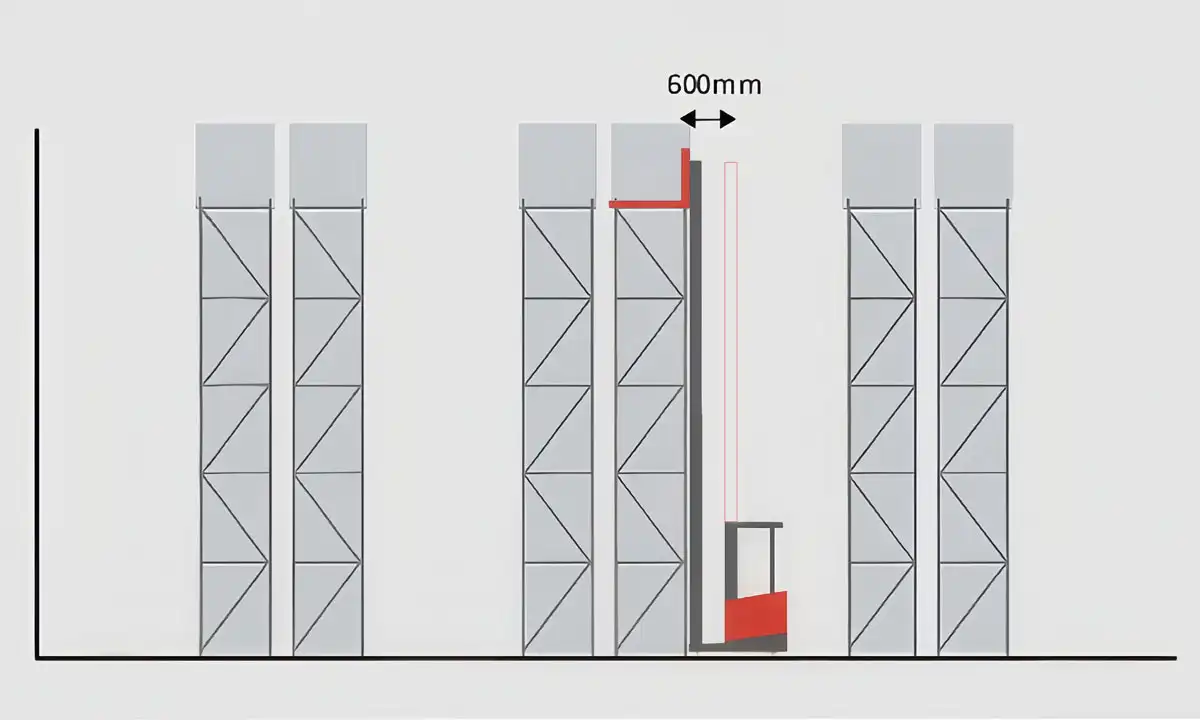
·Best suited for single-deep racking
·Typical aisle width: 2.8–3.0 m
·Compact when retracted → excellent maneuverability
·Ideal for High rack storage (10 m+)
·Heavy pallet operations
Limitation:
Cannot access second pallet position in double-deep racking
Scissor Reach Trucks
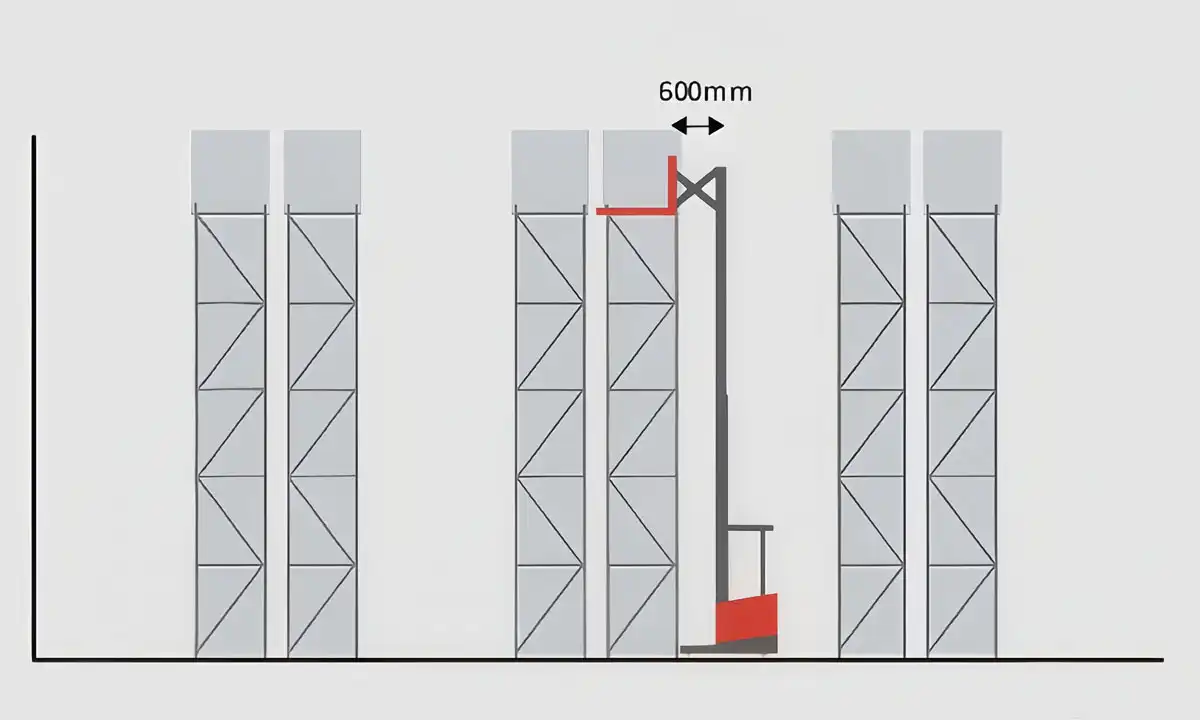
Single Scissor:
·Mainly used with single-deep racking
·Typical aisle width: around 2.8–3.4 m
·Its main advantage is compact fork extension, rather than a significantly narrower aisle requirement
Double Scissor:
·Designed for double-deep racking systems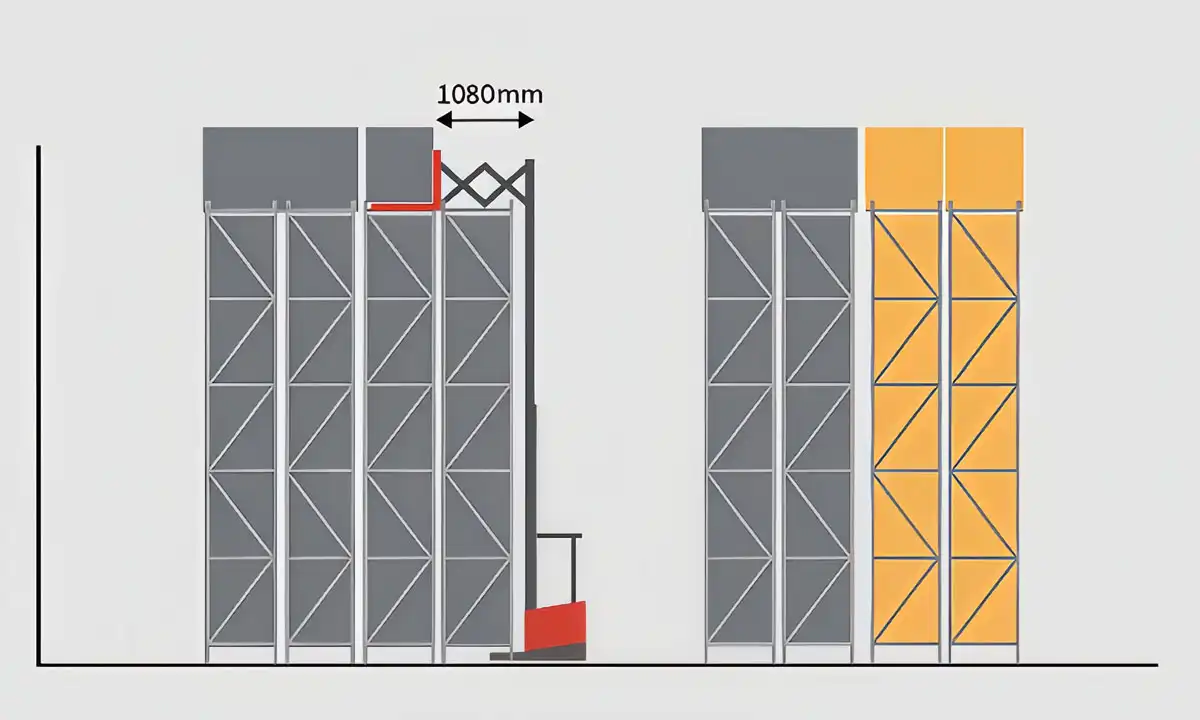
·Typical aisle width: around 2.8–3.4 m
·Warehouse storage density can increase by 50%–100%
·Its major advantage is longer reach, allowing access to the second pallet position
4. Visibility & Energy Consumption
1) Operator Visibility
Standard reach truck:
Clear forward visibility with no scissor obstruction; best performance at heightScissor type:
Scissor arms partially obstruct forward view at low levels (double scissor more noticeable)
2) Energy Consumption
Standard reach truck:
Higher energy demand due to moving full mast assemblyScissor type:
Lighter moving structure → lower forward extension energy consumption
5. Purchase Cost, Maintenance & Reliability
Standard Reach Truck
·Most common market configuration → widely available and cost-effective
·Simple wear parts: Mast rollers, Guide rails, Reach cylinders
·Mature structure with very low failure rate
·Easy maintenance and widely available spare parts
Scissor Reach Truck
·Optional/custom configuration → 15%–35% higher cost
·More mechanical joints: Pins, Rollers, Hinges. Double scissor = doubled wear points
·Higher maintenance frequency due to lubrication and pin wear
·Long-term maintenance cost is higher due to increased mechanical complexity
6. Comparison Summary Table
| Item | Standard Reach Truck | Single Scissor | Double Scissor |
| Movement | Whole mast moves | Mast fixed, single scissor extends fork | Mast fixed, double scissor extends fork |
| Max reach | 450–600 mm | 500–600 mm | 1000–1200 mm |
| Racking type | Single-deep only | Single-deep | Double-deep |
| Max lift height | 11–14 m | 9–11 m | 9–11 m |
| Rated capacity | 1.5–2.5 t | 1.5–2.0 t | 1.0–1.6 t |
| Ailse width | 2.8–3.0 m | 2.8–3.4 m | 2.8–3.4 m |
| High-level stability | Excellent | Good | Average |
| Purchase cost | Lowest | Medium | Highest |
| Maintenance | Simple | Medium | Complex |
| Energy use | Higher during mast movement | Lower | Lower, but hydraulic wear higher |
| Best use case | Heavy-duty high stacking | Light/medium warehouse use | High-density storage |
7. How to Choose the Right Reach Truck?
Choose Standard Reach Truck if:
·You use single-deep racking
·Goods are relatively heavy
·Lift height is above 7–8 meters
·High-frequency loading/unloading
·You prioritize stability and safety
Choose Single Scissor if:
·You still use single-deep racking
·You want slightly better energy efficiency or compact design
·Occasional high stacking only
·Budget allows upgrade over standard type
Choose Double Scissor if:
·Warehouse space is limited and storage density is critical
·You use double-deep racking systems
·Focus is bulk storage rather than fast picking
·Goods are medium/light weight
·You want to maximize storage capacity per square meter